Christian Rory Crossing-Taylor Pérez de Ascanio – General History

Christian

Home/Christian Rory Crossing-Taylor Pérez de Ascanio

About Christian Rory Crossing-Taylor Pérez de Ascanio

This author has not yet filled in any details.
So far Christian Rory Crossing-Taylor Pérez de Ascanio has created 6 blog entries.

Most Important Battles of the First World War, in Chronological Order

The following is a chronological account of the most important battles of the First World War (1914–1918), based on their military, strategic, and political relevance within the overall development of the conflict. The presentation is descriptive and analytical, without value judgments, and aims to provide a clear view of how the war evolved through its main engagements.


1914

Battle of the Frontiers (August 1914)

A series of initial engagements between French, British, and German armies in Belgium, Luxembourg, and northeastern France. Germany implemented the Schlieffen Plan, which sought the rapid defeat of France before concentrating forces on the Eastern Front. These battles marked the failure of Germany’s decisive advance and the beginning of a prolonged war.

First Battle of the Marne (6–12 September 1914)

One of the most decisive engagements at the start of the war. French and British forces halted the German advance toward Paris. The outcome forced Germany to retreat and led to the stalemate on the Western Front, followed by the construction of extensive trench systems.

First Battle of Ypres (October–November 1914)

Fought in Belgium, this battle was crucial in preventing Germany from reaching the ports of the English Channel. It definitively consolidated trench warfare on the Western Front.


1915

Second Battle of Ypres (April–May 1915)

Significant for the first large-scale use of chemical weapons (chlorine gas) by Germany. Although it did not result in a decisive breakthrough, it introduced a new technological and psychological dimension to the war.

Battle of Gallipoli (April 1915 – January 1916)

An Allied operation, mainly British and French, against the Ottoman Empire with the aim of controlling the Bosporus and Dardanelles straits. The failure of the campaign had major strategic and political consequences, particularly for the British Empire and Australia.


1916

Battle of Verdun (February–December 1916)

One of the longest and bloodiest battles of the war. Germany sought to wear down the French army by attacking a strategically and symbolically important location. Verdun became a symbol of resistance and of the industrialized nature of modern warfare.

Battle of the Somme (July–November 1916)

An Allied offensive intended to relieve pressure on Verdun. It was notable for the massive use of artillery and the first appearance of the tank. Although territorial gains were limited, the battle had a significant impact in terms of attrition on both sides.


1917

Battle of Arras (April–May 1917)

A British-led offensive in northern France. It introduced new tactics involving coordination between infantry and artillery, though it failed to achieve a decisive breakthrough.

Battle of Passchendaele or Third Battle of Ypres (July–November 1917)

Characterized by extreme conditions, particularly mud, which severely hindered operations. It represents the peak of human and material attrition on the Western Front during that year.

Battle of Caporetto (October–November 1917)

On the Italian Front, Austro-German forces inflicted a severe defeat on Italy using infiltration tactics. The battle led to a reorganization of the Italian army and the direct intervention of Western Allies.


1918

German Spring Offensive (March–July 1918)

A series of attacks launched by Germany following Russia’s withdrawal from the war. It was the last German attempt to achieve a decisive victory on the Western Front before the large-scale arrival of American troops.

Second Battle of the Marne (July–August 1918)

An Allied counteroffensive that definitively halted the German advance. It marked a strategic turning point and initiated the gradual collapse of the Central Powers.

Hundred Days Offensive (August–November 1918)

A series of Allied operations that pushed German forces toward defeat. It was notable for the coordination between British, French, American, and Canadian troops and led directly to the Armistice of 11 November 1918.


Historical Conclusion

The chronological analysis of these battles makes it possible to observe the transformation of the war from a strategy of rapid movement to a conflict of industrialized and global attrition. Each engagement contributed to redefining tactics, military technologies, and political balances that profoundly shaped the history of the twentieth century.

By | 2026-01-12T11:25:22+00:00 January 12th, 2026|History|0 Comments

The Austrian School of Economics

The Austrian School of Economics is one of the most influential and distinctive traditions in economic thought. It stands out for its methodological individualism, emphasis on subjectivism, critique of mathematical modeling in economics, and deep skepticism of government intervention in markets. Its roots trace back to late 19th-century Vienna, and although it was long considered a heterodox tradition, its influence has grown significantly, especially within libertarian and classical liberal circles.

A comprehensive overview of the Austrian School of Economics must address its historical development, methodological foundations, core economic principles, critiques of other schools, key figures, and its modern relevance and criticisms. Below is an extensive treatment of each.


1. Historical Development

The Austrian School originated in Austria-Hungary in the late 19th century, mainly as a response to the German Historical School, which emphasized empirical and historical methods over theory.

a. The Marginal Revolution (1871)

The school began with Carl Menger, whose 1871 book Principles of Economics (Grundsätze der Volkswirtschaftslehre) played a central role in the so-called Marginal Revolution, alongside William Stanley Jevons and Léon Walras. Menger introduced the concept of marginal utility, explaining value as a subjective phenomenon determined by the utility an individual derives from the last unit of a good consumed. This sharply contrasted with classical theories of value (like the labor theory of value).

b. Early Development (Late 19th–Early 20th Century)

Menger’s ideas were developed by his students and followers, including:

  • Eugen Böhm-Bawerk: Known for his theory of capital and interest, arguing that interest arises from time preference—the preference for present goods over future goods.
  • Friedrich von Wieser: Developed the concept of opportunity cost and expanded on marginal utility theory.

c. Interwar Period: The Austrian Business Cycle Theory

The interwar years saw a flourishing of Austrian thought, particularly in Vienna. The Austrian School became associated with critiques of socialism and central planning, most notably through the work of Ludwig von Mises and Friedrich A. Hayek.

  • Mises’ Socialism (1922) and Human Action (1949) were foundational in asserting that rational economic calculation is impossible under socialism.
  • Hayek became known for his critique of central planning in The Road to Serfdom (1944) and for elaborating the knowledge problem—the idea that no central planner can possess the dispersed knowledge held by individuals in a market.

d. Post-War Period and American Resurgence

The Austrian School lost prominence after World War II, overshadowed by Keynesianism and neoclassical synthesis. However, it saw a revival in the United States, especially from the 1970s onward, thanks to scholars like Murray Rothbard, Israel Kirzner, and later Peter Boettke, Jesús Huerta de Soto, and others.


2. Methodological Foundations

Austrian economics is distinct in its epistemology and methodology, often in stark contrast with the mainstream neoclassical approach.

a. Praxeology

Ludwig von Mises advanced praxeology, the idea that economics is a deductive science based on the a priori axiom that “humans act”—that is, individuals use means to achieve ends. This contrasts with empiricism and positivism, which rely on hypothesis testing and statistical analysis.

  • Praxeology emphasizes logical reasoning from basic premises, not empirical observation.
  • Austrians argue that statistical data can describe but not explain economic phenomena because human actions are not subject to constant relations like physical sciences.

b. Subjectivism

Austrians believe all value is subjective—dependent on the preferences and knowledge of individual actors. This applies not only to goods and services but also to costs, capital, and even time.

c. Methodological Individualism

Economic phenomena are ultimately the result of individual choices and actions. Therefore, analysis must start with the individual rather than abstract aggregates like “national income” or “price level.”


3. Core Economic Principles

The Austrian School offers a wide-ranging, internally coherent theory of economics based on its methodological principles.

a. Time Preference and Capital Theory

  • Individuals prefer goods sooner rather than later.
  • Capital goods are not homogeneous but are part of a structure of production that unfolds over time.
  • Böhm-Bawerk and Mises developed a roundabout production model, where longer production processes (higher-order goods) increase output but require more savings and time.

b. The Austrian Business Cycle Theory (ABCT)

  • Proposed by Mises and elaborated by Hayek.
  • Business cycles are caused by artificial credit expansion by central banks.
  • When central banks lower interest rates below the natural rate, it distorts the structure of production, causing malinvestment (especially in capital-intensive industries).
  • The boom is unsustainable; when interest rates normalize or credit tightens, the economy must correct itself via a bust or recession.

c. Entrepreneurship

  • Israel Kirzner emphasized the role of the entrepreneur as someone who notices and acts upon previously unnoticed opportunities.
  • The market process is dynamic and discovery-based, not static equilibrium as in neoclassical models.
  • Entrepreneurs drive the adjustment process toward equilibrium, but this equilibrium is never reached due to the continuous emergence of new knowledge.

d. Spontaneous Order

  • Hayek developed the concept of spontaneous order to explain how social institutions like language, money, and law emerge not by design but through the accumulated actions of individuals.
  • Market prices serve as signals reflecting dispersed knowledge and coordinating economic activity better than any central planner could.

4. Critiques of Other Schools

The Austrian School has historically been critical of:

a. Socialism and Central Planning

  • Mises’ Economic Calculation Problem: Without market prices for capital goods, socialist planners cannot allocate resources efficiently.
  • Hayek’s knowledge problem complements this, showing that the knowledge needed to plan an economy is decentralized and often tacit.

b. Keynesianism

  • Austrians reject the Keynesian focus on aggregate demand management, deficit spending, and fiscal stimulus.
  • They argue Keynesian policies create distortions and ignore the importance of capital structure and time.

c. Mathematical Economics

  • Austrians reject the use of mathematical models as inappropriate for a science of human action.
  • They argue that economics deals with purposeful behavior, not mechanistic behavior, and thus cannot be accurately modeled like physics.

d. Empiricism and Econometrics

  • They contend that because economic phenomena are non-repeatable and contingent on individual knowledge, statistical correlations cannot establish causality.

5. Key Figures and Their Contributions

NameKey Contributions
Carl MengerFounder; marginal utility; theory of value
Eugen Böhm-BawerkCapital theory; critique of Marxism; interest and time preference
Friedrich von WieserOpportunity cost; theory of imputation
Ludwig von MisesPraxeology; human action; critique of socialism; business cycle theory
Friedrich HayekKnowledge problem; spontaneous order; business cycle theory; Nobel laureate 1974
Murray RothbardSystematic libertarianism; integration of economics with ethics and politics
Israel KirznerTheory of entrepreneurship; market process theory

6. Modern Relevance and Institutions

In recent decades, the Austrian School has seen a resurgence among libertarian thinkers, entrepreneurs, and critics of central banking.

a. Key Institutions

  • Ludwig von Mises Institute (U.S.): Promotes Austrian economics, libertarian political theory, and Rothbardian thought.
  • Austrian Economics Center (Vienna): Promotes free-market economics in Europe.
  • George Mason University: Known for scholars such as Peter Boettke and Christopher Coyne who integrate Austrian ideas with public choice and institutional economics.

b. Applications Today

  • Criticism of central banks, especially the U.S. Federal Reserve and the European Central Bank.
  • Advocates of Bitcoin and decentralized finance often draw on Austrian critiques of fiat money.
  • Interest in economic education and self-regulating markets is growing due to dissatisfaction with mainstream policy prescriptions.

7. Criticisms of the Austrian School

Despite its rigor, the Austrian School has faced criticisms from many quarters:

  • Non-falsifiability: Critics argue praxeology is not falsifiable and thus not scientific.
  • Lack of formal models: Some argue its theories lack precision without mathematics.
  • Overreliance on deductive logic: Critics claim real-world complexity cannot be captured through pure deduction.
  • Neglect of empirical analysis: In the age of data-driven economics, the Austrian school is often seen as outdated.
  • Ideological bias: Its tight alignment with libertarian political agendas can undermine perceived neutrality.

Conclusion

The Austrian School of Economics is a deeply intellectual and distinctive tradition that challenges the mainstream on foundational grounds—epistemology, methodology, and ethics. Its emphasis on individual human action, time, uncertainty, and market processes offers profound insights into how economies function and fail. While it remains outside the economic mainstream, its critiques of socialism, central planning, and government intervention continue to shape political and economic discourse—especially in debates around sound money, entrepreneurship, and market coordination.

Whether one agrees or disagrees with its premises, the Austrian School is essential reading for anyone seeking to understand the rich tapestry of economic thought.

Racism in History

According to Oxford Dictionaries Online, Racism is:  “Prejudice, discrimination, or antagonism directed against someone of a different race based on the belief that one’s own race is superior.” And then there is another meaning: “The belief that all members of each race possess characteristics, abilities, or qualities specific to that race, especially so as to distinguish it as inferior or superior to another race or races.”

Unfortunately, there has been racism since the beginning of history. And if you really get into it you will find facts that you did not want to know, for example, when you realize that even one of your favourite philosophers like the Greek Aristotle said that Greeks are free by nature while Barbarians (non-Greeks) are slaves because they are more willing to submit to a despotic government! This statement is published in a book by Kevin Reilly called ‘Racism: A Globar Reader’.

Just imagine how popular Aristotle would be if he had said that in 2019, he would probably lose all his credibility or would only be supported by the few racists that mingle with us in the 21st century. Or ar they not so few? Many people think that the United States of America, Spain or even Great Britain are still racist countries…

Racism in the United States has been there since the very beginning, we are talking about the Colonial Era. Only white Americans had privileges and rights while all other races had no rights at all. Education, voting rights, citizenship, land acquisition, etc, were exclusive privileges for white Americans. These kind of things remind us that we are true animals indeed, and that we don’t know anything about humans and how we really are. Racism in history still makes black people want revenge in America, let alone native Indians.

But black people and Indians weren’t the only ones who’ve suffered from racism throughout history, what about Jews after World War I ? Anti-semitism “was successfully exploited by the Nazi Party, which seized power in 1933 and implemented policies of systematic discrimination, persecution, and eventual mass murder of Jews in Germany and in the territories occupied by the country during World War II (see Holocaust)”, according to britannica.com.

Did you know that even National Geographic had a Racist Coverage for decades? And how do we know it? Because they have acknowledged it in an article by Susan Goldberg (Editor in Chief). This is what she wrote: “It is November 2, 1930, and National Geographic has sent a reporter and a photographer to cover a magnificent occasion: the crowning of Haile Selassie, King of Kings of Ethiopia, Conquering Lion of the Tribe of Judah. There are trumpets, incense, priests, spear-wielding warriors. The story runs 14,000 words, with 83 images. If a ceremony in 1930 honoring a black man had taken place in America, instead of Ethiopia, you can pretty much guarantee there wouldn’t have been a story at all. Even worse, if Haile Selassie had lived in the United States, he would almost certainly have been denied entry to our lectures in segregated Washington, D.C., and he might not have been allowed to be a National Geographic member.”

The architecture throughout history

Architecture exists since the first time someone had the idea of planning, designing and constructing a building of any type anywhere. Just think about it, when was the first time someone decided to change his own environment for good and with what knowledge? Who was the first architect on Earth? These are questions that might not have an answer but we are lucky we can enjoy buildings and constructions that can easily have more than 8,000 years of age…

When was Architecture created? It must have been during the Neolitic (more than 10,000 years BC), and thanks to this new type of men we now call architects, people could now become sedentary, as now they had new shelters, walls, houses and organized crops to be able to stay in a recently built town instead of having to move elsewhere from time to time. The era of moving from one place to another was a thing of the past.

These new constructions and buildings were created by men who could transform their environment into anything that was needed: a defensive castle, an independent or self-sufficient place, etc. People who had the ability of seeing these images on their head and making them real weren’t called architects yet, but now it is one of the most important professions in the world.

Then of course came the unbelievable constructions of the Ancient Mesopotamia with the Ziggurat of Ur, the Assyrian palace of Ashurnasrirpal II or the Ishtar Gate, which are buildings that can impress you even now, 5,000 years later.

Architecture was booming at that time, people with money wanted to become eternal and leave their footprint forever. This is how the pyramids of Giza were created or the Temple of Horus at Edfu, a typical example of Egyptian architecture.

But the trend wasn’t over yet, now it was time for the Greeks and their Agoras, surrounded by their buildings and temples. The Partenon in the Acropolis still rises as one of the most beautiful buildings of all time.

But what about the Colosseum or Coliseum? Romans took advantage of the architectural knowledge of the Greeks and even perfected it. The Roman’s aqueduct of Segovia is a good example of how important architecture can be to save or improve the lives of many people in towns and cities. The interior of the Pantheon in Rome, is also something that can amaze you now in 2018.

By then everybody knew that ‘something as external as a building could really have an impact on our daily mood’. Architecture was absolutely necessary by then and it’s still the same way today. Society needs good architects and especially the ones that go into things that aren’t mainstream like the professionals who choose to study a Master of architecture in Collective Housing.

There is such a competition nowadays that if you want to be the best you need to offer something different. This is why many students are now specialising themselves. A good example of this is what we said before: An architect that needs to specialize in Collective Housing or an Asian Historian who wants to specialize in Spanish History, for example. The fact remains, architecs are one of the most important professions today, at the same level as doctors. And from General-History we’d like to thank you all for your passion, time and effort.

By | 2018-12-21T16:57:27+00:00 December 21st, 2018|History|0 Comments

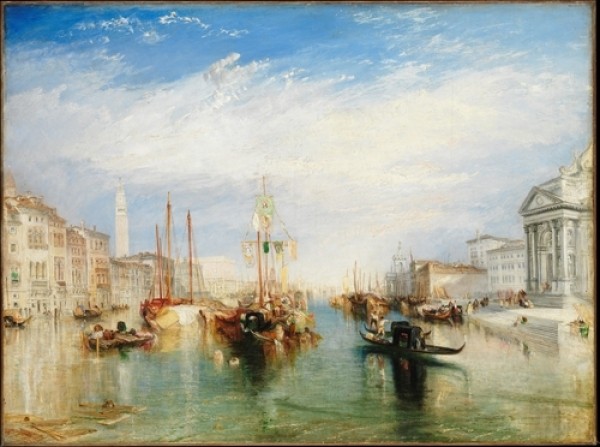
William Turner (Painter)


William Turner VeniceJoseph Mallord William Turner (1775-1851) was an English painter who stood out thanks to his extraordinary watercolour landscapes and oil paintings.

The particular confusion between brilliance and madness was very obvious in the biography of William Turner. An academic painter during his origins, Turner developed his art until reaching a free, atmospheric and in occasions, abstract style that made critics reject his creations until they finally understood he was just a genious. (more…)

Load More Posts
Please disable your ad blocker on this website. Ads allow us to continue writing content. Thank you very much and we apologize for any inconvenience.