Skip to content
General History
  • Home
  • World History
  • European History
  • English History
  • French History
  • Spanish History
  • Rome
juan-prim-y-prats
November 21, 2013November 7, 2026
World History Italian History Spanish History

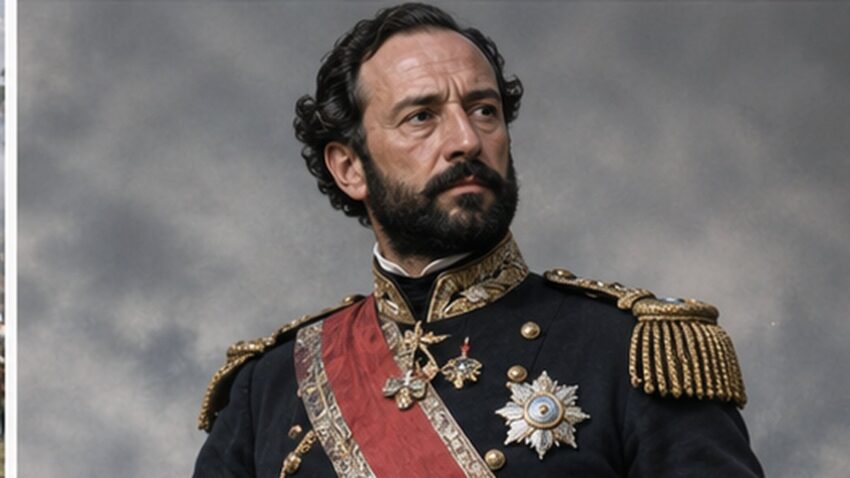
Juan Prim y Prats

If he had not been assassinated, this 19th century Spanish soldier and politician would probably have been forgotten, but as his death added to the unattractive list of conspiracy theories, the neglect historians usually apply to failed politicians has not been forthcoming.

Table of Contents

Toggle
  • Share this:
  • Related

He was born in 1814. At twenty-five he had joined the Progressives and directly opposed the dictatorship of Baldomero Espartero, for which he was sent into involuntary exile, but Juan came back as a soldier and defeated Espartero in 1843.

He went to Puerto Rico, then still in the fading Spanish Empire, where he was Captain-General from 1847 – 48, while still a young man. From 1850 – 56 he was a deputy in the Spanish Cortes (Parliament). In debates he was hardly noticed, but he did fail in an insurrection attempt in 1866, and had to escape to England and from thence to Brussels. It was from this city that he directed the 1868 movement which eventually threw Queen Isabel II of Spain off the throne.

Returning in moderate triumph to his country he became War Minister under Francisco Serrano, Duque de la Torre, but overrode him to become a virtual dictator. Now the conspiracy theory begins: It was Prim y Prats who craftily secured the choice of Amadeus I Savoy as King of Spain in 1870, but in that year his carriage was blocked in the street by two other conveyances, and four men armed with rifles shot Prim (who was travelling with two friends) at almost point blank range. No-one seemed to know what was happening but Prim was taken, severely wounded to a hospital. Once the bullets had been removed it appeared he would survive, but was found dead in the bed shortly afterwards. The official version of his death was that he had died of bullet wounds, but the body was embalmed, and years later forensic surgeons found distinct marks of strangulation on his throat. Most historians agree that Prim had been turned off, certainly by persons he assumed were friends visiting the bedside.

Who exactly was behind this coup has never been established, though suitable candidates abound, including Amadeus himself, Alfonso de Borbón (Prim publicly loathed all Borbónes) and other important suspects. What is obvious is that the shooting in the street was found lacking, and those who wished Prim y Prats dead had to finish the job in a hospital.

Share this:

  • Share on Facebook (Opens in new window) Facebook
  • Share on X (Opens in new window) X
  • Share on WhatsApp (Opens in new window) WhatsApp
  • Share on Telegram (Opens in new window) Telegram
  • Share on Reddit (Opens in new window) Reddit
  • Share on LinkedIn (Opens in new window) LinkedIn
  • Email a link to a friend (Opens in new window) Email

Related

Leave a Reply Cancel reply

Your email address will not be published. Required fields are marked *

Author

‘Dean Swift’ is a pen name: the author has been a soldier; he has worked in sales, TV, the making of films, as a teacher of English and history and a journalist. He is married with three grown-up children. They live in Spain.

Buy General-History Books on Amazon

Sources & Bibliography

Encyclopaedia Britannica
Oxford Encyclopaedia of World History
Chambers Dictionary of World History
New Penguin Dictionary of Modern History
The Spectator

Works of:
Andrew Roberts
Antony Beevor
Adam Nicholson
John Sutherland
Paul Johnson
George Macdonald Fraser
Sir Iain Moncreiffe of that Ilk
Christopher Lee
Dan Jones
Paul Massie

Recent Posts

  • Could Francisco Pizarro Have Conquered the Inca Empire Without the Inca Civil War?
  • Why Are jersey nba basketball and cheap soccer jerseys Shaping Global Fan Culture Today?
  • Why Historic Market Towns Like Thirsk Are Still Worth Visiting
  • Beyond the Frame: How Glass Walls and Crittall-Style Designs Are Transforming Modern Interiors
  • How Families Pass Language and Learning Traditions Between Generations

Recent Comments

  • FatDave on History of the Cinema: ‘The Wild Geese’
  • miss shermyra nahveta on Jack The Ripper and the British Royal Family
  • Dale Nail on The Battles of Little Bighorn & Wounded Knee
  • Dean Swift on The real Sir William Wallace
  • RR on The real Sir William Wallace

Categories

  • A history of Australia
  • A history of Hungary & Austria/Hungary
  • A History of North America
  • A History of Poland
  • A history of the motor car
  • African History
  • Asian History
  • Austrian history
  • British History
  • Church history
  • Commercial
  • Commonwealth History
  • Commonwealth of Nations
  • Czech History
  • Dutch History
  • English History
  • English Language
  • Estonia, A History
  • EU History
  • French History
  • German History
  • Greek History
  • History
  • History in The Balkans
  • History of Afghanistan
  • History of China
  • History of Czechoslovakia
  • History of Egypt
  • History of Finland
  • History of haute cuisine
  • History of India
  • History of Ireland
  • History of Japan
  • History of Korea
  • History of New Zealand
  • History of Portugal
  • History of Rome
  • History of the Cinema
  • History of the Far East
  • History of the Low Countries
  • History of Turkey
  • Humour
  • Italian History
  • Jewish History
  • Philosophy
  • Romanian History
  • Russian history
  • Scandinavian history
  • Scottish history
  • South American History
  • Spanish History
  • Swiss History
  • The Arab races
  • Today
  • US History
  • World History

License

Creative Commons License
©2026 General History | Powered by WordPress and Superb Themes!