
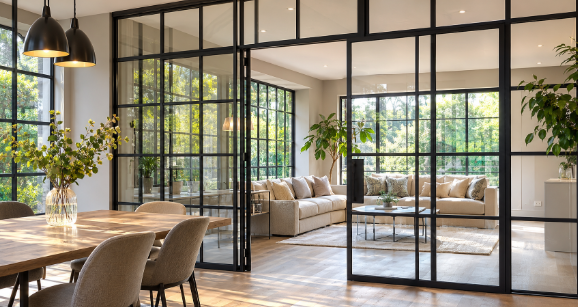
Glass has become one of the defining materials of contemporary architecture and interior design. Its ability to maximise natural light, create visual continuity and introduce a sense of space makes it an increasingly popular choice in both residential and commercial properties. From elegant Crittall-style doors to bespoke glass partitions, balustrades and decorative mirrors, modern glass installations combine aesthetic appeal with practical functionality.
As open-plan living and flexible working environments continue to influence building design, glass offers an effective way to divide spaces without making them feel enclosed.
Crittall-Style Doors: Industrial Character Meets Modern Elegance
Crittall-style doors have become a distinctive feature of contemporary interiors. Originally inspired by traditional industrial steel-framed windows, they are recognised by their slim black frames and geometric glazing patterns.
Their popularity comes from their ability to complement different architectural styles. In period properties, they introduce a subtle industrial contrast, while in modern homes they reinforce clean lines and minimalist aesthetics.
These doors are particularly useful for separating kitchens from dining rooms, creating home offices or dividing living spaces. Unlike conventional solid doors, their glazed panels allow natural light to pass between rooms, maintaining a connection between different areas of a property.
Available in hinged, sliding, pivot and double-door configurations, Crittall-style systems can be adapted to different openings and interior layouts. Aluminium alternatives also provide a lightweight, durable option with a similar visual appearance.
Glass Walls and Partitions for Flexible Interiors
Glass walls are an excellent solution for creating separate functional areas while retaining an open and spacious atmosphere. They are widely used in offices, hotels, retail environments and residential properties.
In workplaces, glazed partitions can create private meeting rooms and individual offices without sacrificing natural light. At home, they can separate bedrooms, kitchens and studies while preserving the overall feeling of openness.
There are several types of glass available, depending on the intended application. Clear glass offers maximum transparency, while frosted and textured finishes provide additional privacy. Laminated and acoustic glazing can improve sound insulation, making them particularly useful in busy environments.
The choice of framing also influences the final appearance. Black aluminium profiles create an industrial aesthetic, whereas frameless systems offer a more discreet and contemporary finish.
For inspiration and further information about available installations, explore https://ugspot.co.uk/glass-works/glass-wall.
Glass Balustrades: Combining Safety and Style
Another important application of architectural glass is the balustrade. Glass balustrades are increasingly popular in contemporary homes, commercial buildings, balconies, terraces and staircases.
Their transparent appearance allows uninterrupted views and creates a sense of continuity between different areas. They are particularly effective in properties where preserving natural light and maintaining an unobstructed outlook are important design considerations.
Different configurations are available, including framed, semi-frameless and frameless systems. Each offers a different visual effect and installation method.
However, appearance should never take priority over safety. Glass balustrades must be designed using appropriate safety glazing, structural fixings and supporting systems. Toughened and laminated glass are commonly specified, depending on the location and intended use. Compliance with relevant building regulations is essential, particularly for installations protecting changes in floor level.
Stainless steel fittings and discreet fixing systems can further enhance the overall appearance while providing the necessary structural support.
Those considering this type of installation can find additional information about glass balustrade solutions here.
Mirrors and Decorative Glass in Interior Design
Mirrors are another versatile element of modern glass design. Although traditionally associated with bathrooms and bedrooms, they are now widely used in living rooms, hallways, hotels, restaurants and commercial interiors.
A strategically positioned mirror can reflect daylight, make a compact room appear larger and introduce depth into an interior. Large wall-mounted mirrors are particularly effective in narrow hallways and smaller spaces.
There are numerous options available, including frameless mirrors, bevelled designs, tinted finishes and bespoke shapes. These can be manufactured to suit specific dimensions and complement the architectural characteristics of a property.
Beyond mirrors, decorative glass can also be incorporated into splashbacks, shelving, tabletops, wall panels and furniture. Coloured, painted and textured finishes provide additional opportunities to introduce personality without compromising the clean appearance associated with glass.
For further information about mirror installations and bespoke options, visit UGSPOT.
Choosing the Right Glass Installation
Selecting the right glass solution involves considering more than its visual appearance. The intended use, dimensions, privacy requirements, acoustic performance and safety specifications should all influence the final decision.
For example, an office partition may require enhanced sound insulation, whereas a residential glass wall might prioritise transparency and natural light. External installations also need to account for weather exposure, structural loads and suitable materials.
Professional measurement and installation are equally important. Glass panels must be manufactured to precise specifications, with appropriate consideration given to frames, hinges, handles, seals and fixing systems.
Maintenance should also be considered. Most glass installations are relatively easy to clean, although certain coatings and decorative finishes may require specific care.
Conclusion
Crittall-style doors, glass walls, partitions, balustrades and mirrors demonstrate the versatility of glass in contemporary architecture. Whether the objective is to create a striking entrance, divide an open-plan interior, improve natural lighting or introduce a decorative feature, glass offers a combination of elegance and practicality.
With careful planning, appropriate materials and professional installation, glass can transform residential and commercial environments into brighter, more functional and visually appealing spaces.