German History – Page 12 – General History

German History

Home/German History

The Peninsula War (1807-14)

Joseph, brother of Napoleon Bonaparte /fuenterrebollo.com

Joseph, brother of Napoleon Bonaparte /fuenterrebollo.com

Napoleon Bonaparte decided he would imitate the Roman emperors. Instead of listening to his better senses, he invaded the Peninsula of Spain and Portugal, causing one of the Napoleonic Wars, and a very great deal of unnecessary bloodshed. Spain is included in the very short list of nations it is unwise to invade or attempt to occupy. (more…)

The Nine Years War


William III/ livius.org

William III / livius.org

Of all the wars known by duration in years, the least well-known is the Nine Years War (1688 – 97). Nevertheless this conflict has its important side, as it involved the Sun King himself, Louis XIV of France, and Britain under her Dutch-born monarch, William III. (more…)

The Home Guard (a.k.a.Dad’s Army)


The Home Guard in training / dacorumheritage.org.uk

The Home Guard in training / dacorumheritage.org.uk

Thanks to a BBC-made TV series stretching from the early Sixties to the late Seventies, a phenomenon from the Second War has become memorable. The series was written about a force of elderly men and teenage boys raised in Britain as a home defence organisation, in case of invasion by Nazi hordes. (more…)

The Hohenzollern family

William ! of Prussia / en.wikipedia.org

William ! of Prussia / en.wikipedia.org

Of all the great and influential German families, descending from the mists of time, always involved in something – providing kings, making a nuisance of themselves, being or not being involved in charitable causes etc., the Hohenzollern top the list. There are still plenty of them around, but their power has waned. (more…)

Archers and Archery

English and Welsh bowmen (and King Henry V) at Agincourt / lookand learn.com

English and Welsh bowmen (and King Henry V) at Agincourt / lookand learn.com

An archer was a soldier, usually professional, armed with a bow and a quiver full of arrows. It would be difficult to estimate how long this lethal weapon has been in use, but woodcuts exist of Scythian archers employed by the Romans. The bow was not long, because the Scythians fought on horseback, but the arrow seems to have been at least two and a half feet long from goosefeather guide to the iron arrowhead. (more…)

Serfs

As villeins or servants of a medieval lord serfs were not actually slaves, though many writers of historical novels would have them so. Peasants they were, and by no means free. They were there to work the land of the lord (from which comes the more modern expression ‘landlord’). Serfs represented the lowest possible level of society. (more…)

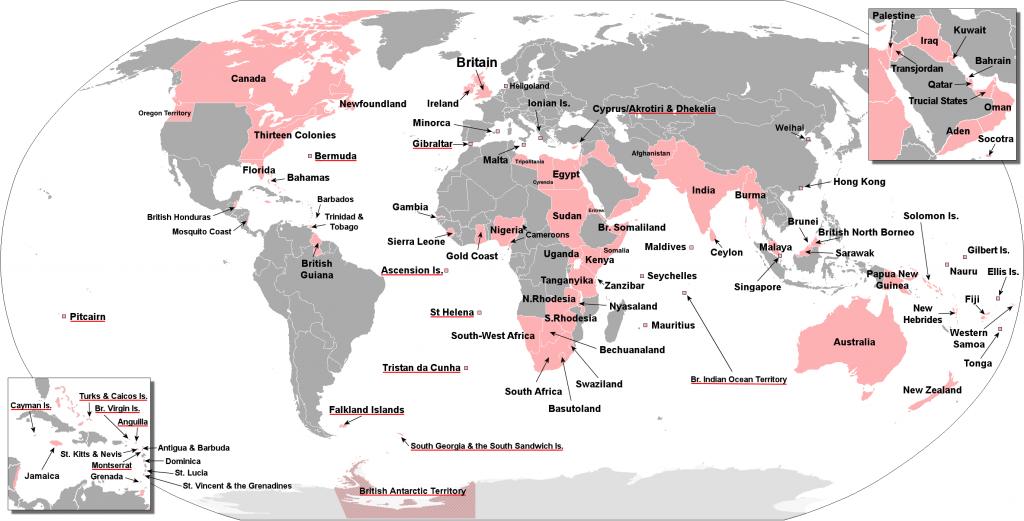
The end of the British Empire and imperialism

The_British_Empire


It is barely seventy-two years since a quarter of the human race lived, toiled, danced and finally died under the Union Jack. It is a very short time in terms of the history of the world, but in that time the British view of themselves, and their nation’s place in that world has altered, perhaps more radically than ever before. No other country has experienced a sudden and dramatic convulsion in its own outlook – no, not even terrible wars, occupation, subjection beneath the heel of an aggressive foreign invader, however awesome their effect, can produce a change in national philosophy as total as that undergone by the British since 1939. While Rome took centuries to crumble, the British Empire vanished almost overnight. (more…)

Frederick (the Great) of Prussia

He was born in 1740, the son of Frederick William I and his queen, Sophia Dorothea, a daughter of George I of Great Britain. As a boy he was bullied by his father, who thought nothing of whipping the child in front of shocked servants. His father was known is royal circles as ‘the royal drill-sergeant’, and with reason. Frederick William was a strict religionist, violent-tempered, notorious for his malreatment not only of his son but for women and servants too. It is not surprising that that the boy grew up to be peculiar. (more…)

By | 2012-12-05T11:18:18+00:00 December 5th, 2012|Austrian history, German History, World History|0 Comments

Who were the Anglo-Saxons?

Anglo-Saxon men / fashion.era.com

Anglo-Saxon men / fashion.era.com

They were Jutes, a Germanic tribe whose names are preserved today in Jutland and Juteborg. They invaded Britain in the 5th century under the leadership of Hengist and Horsa. The Venerable Bede tells us they occupied the Isle of Wight, parts of the Hampshire coast, and Kent with its capital at Canterbury. They were also Saxons,  (Germanic) though they came from the Danish peninsula, and lived partly from piracy from the 3rd century AD to the 5th, when they invaded Britain at the end of Roman supremacy. Their name survives in Wessex, Essex, Sussex and Saxony in Germany itself. The Saxons and Jutes were joined by the Angles,  Germanic in origin who probably came from the area of Schleswig-Holstein or neighbouring Denmark. They settled down in East Anglia and Northumbria. Their name survives in the gradual metamorphosis from Anglo-Saxon England to Englaland and thence to England. (more…)

Load More Posts