Russian history – Page 12 – General History

Russian history

Home/Russian history

History of the Bible

The Bible is the sacred book of Christianity. There are many Christian churches, but all accept the two sections of it: the Hebrew scriptures, which we know as the Old Testament, and the Christian writings, known as the New Testament. Roman Catholics, among other Christian churches, accept a third section known as the Apocrypha. This was included in the Greek version of the Old Testament (the Septuagint).

(more…)

The Fabian Society

In modern literature and journalism the reader will often find a mention of the Fabians. It is as well to know exactly to what this name refers.

The Fabian Society was a movement of mainly middle and upper class intellectuals, established in 1884 to spread socialist ideas among what they called, perhaps patronisingly, ‘the educated classes’. Some may think it odd that a purely socialist movement should eradicate the working classes from its audience. Their aim, they said, was to work out the application of socialist principles to intelligent Britain.

(more…)

By | 2025-03-06T21:38:33+00:00 January 27th, 2011|English History, Russian history|0 Comments

The Battle of Arnhem 1944

General Browning, husband of novelist Daphne de Maurier / homeusers.brutele.b

Arnhem is the sixth largest city in the Netherlands. It was the scene of fierce and remorseless fighting between 17 and 26 September, 1944, following the successful invasion of Normandy in June, by allied troops, ships and airforces.

The idea for a parachute/glider-mounted attack in the Dutch Netherlands is said to have been General Montgomery’s, though it was backed by General Eisenhower, supreme commander of the allied forces, and Winston Churchill, Britain’s prime minister. The idea was a very good one, strategically speaking, but it failed to take heed of local advice about cleverly hidden German tank regiments between Nijmegen and Arnhem. In fact the allies decided to take no notice whatever of clear and accurate intelligence. Clearly, in the minds of the planners lay the idea that if Arnhem should prove successful, it would raise the morale of the inading allies tremendously – as indeed it would have – had the Arnhem plan worked.

(more…)

Anticlericalism

Anti-clericalism is not the same as anti-Christian movements. Most Roman emperors tried to stamp out Christianity from the death of Christ under Tiberius until Constantine the Great decided to adopt Christianity as an official religion within the Empire, thus ceasing the practice of pitting Christians against lions and other wild animals, such as hyenas, in the ring.

The name anti-clericalism applies in modern times to any policy bent on destroying the moral and political power of the Christian Church, and subordinating its non-spiritual functions within the State. Though there have been many instances of anti-clericalism at the expense of the Orthodox Church (Russia and Turkey), and even now in Moslem countries (see recent massacres of Christians in Iraq and Afghanistan), the term is usually restricted to aggressive hostility towards the Roman Catholic Church, its Pope, bishops, priests, monks and nuns. (more…)

The Ancien Régime: what was it and did it work?

Countless times as you read books and learned pamphlets on history, you will meet the French words Ancien Régime. It is an easy bet that many of us only half know what these two simple words signify. The translation is easy: in English – traditional method of government by royalty; in Spanish – el antiguo regimen.

(more…)

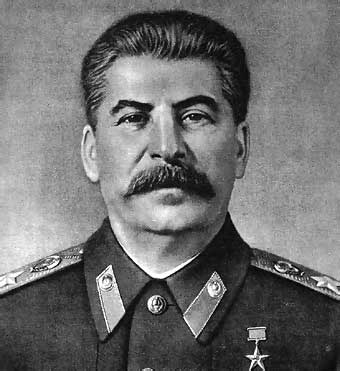
Josef Stalin

Iósif Stalin

Iósif Stalin

Born in Georgia, his family name was actually Djugashvili, and his adopted middle name was Visarionovitch. This hero of the Soviet Union was a living reminder of the ancient truth that holds that most great ideologies are in themselves worth study, or even practical use; the problem is that, accepting the human race as it is, the ideology must be adapted and executed as reality by a member of that race, and as the race is flawed, the original ideology which might have been excellent if properly observed, changes and is ultimately corrupted by its association with human beings.

(more…)

By | 2017-07-21T14:19:43+00:00 October 31st, 2010|Asian History, Russian history, World History|1 Comment
Load More Posts