World History – Page 32 – General History

World History

Home/World History

The real Macbeth

The Scottish island of Iona, where the real Macbeth is buried / southernhebrides.com

The Scottish island of Iona, where the real Macbeth is buried / southernhebrides.com

Macbeth is the shortest of Shakespeare’s plays and probably the work most associated with that playwright’s well-known sense of imagery. His vivid imagination is also shown hard at work. Hardly a detail in the play’s structure is historically correct, but as in the same writer’s Richard III it really does not matter as the play’s the thing, and though both works might have been composed by a sixteenth century Hollywood scriptwriter, they are towering monuments to the power of the imagination. (more…)

Christmas Message from ‘Dean Swift’

Statistics tell us we seem to have the good fortune to be read by a respectable number of thousands of history students every month. We say Happy and Merry Christmas and the Best of new Years to our loyal watchers, and may we have many more of them! This history website is entirely free, and no-one gets paid – let us call it a ‘community service’. The idea is and was to provide accurate history B.C to A.D. in the briefest doses possible, with a few memorable dates, a sense of humour, and permanent acknowledgment to our dozens of sources, principally Encyclopaedia Britannica.

 Shortly we hope to publish in hard-back book form an edited version of the three hundred-odd articles already posted on general-history.com


Very best wishes,


‘Dean’

By | 2012-12-24T10:58:32+00:00 December 24th, 2012|World History|0 Comments

General Templer & the Malayan Emergency

Sir Gerald Templer / sahr.co.uk

Sir Gerald Templer / sahr.co.uk

Gerald Templer, a boy destined for military honours if ever there was one, was born in 1898. After joining up as a boy soldier he rose rapidly through the ranks to become a Field Marshal. He was a fighting soldier as opposed to a headquarters mapman, and commanded the 6th Armoured Division in World War II.

He was vice-chief of what used to be called the Imperial General Staff when there was still an Empire needing a general staff, and then he was made High Commissioner in Malaya (1952 – 54) during the high moments of the Malayan Emergency. (more…)

The sea battle of Trafalgar

Artist's impression of part of the Battle of Trafalgar / britishbattles.com

Artist’s impression of part of the Battle of Trafalgar / britishbattles.com

There is a running fight, not unlike the battle of Trafalgar itself, between Spanish, British and French historians, which has continued without pause since 1805. Friendships which should have been for life have been broken because of this eminently historical conflict on the high seas. I prefer to examine the views of American historians, who should have no axe to grind, as 1805 happened a long time before US influence dominated, or at least tried to dominate the world. (more…)

Special Note to followers of General-History

From today we shall take a short break, for travel, research and the Christmas holidays. Apart from the occasional Humour or ‘Quis?’ posts which will appear during the break, G-H has 44 Categories, including historical subjects, Humour, Philosophy, Today and the English Language. 398 posts have been published, and we have also published 200 Comments of all kinds, with replies to some written by Dean Swift or Christian. There is enough to read or study for many, many days, and we will start again early in the New Year.

Very best wishes, a Happy Christmas and an educational New Year to our thousands of visitors.

By | 2012-12-12T09:23:11+00:00 December 12th, 2012|English Language, Today, World History|1 Comment

Historians Polybius, Sallust, Seneca, Suetonius & Tacitus

POLYBIUS (204 – 122 BC) had the good luck (from the intellectual point of view) to be a historian during the rise of Rome after the 2nd Punic War. He was a Greek of noble blood not without political importance, but he was taken toRome with several other Greeks as hostages. This happened after the Roman intervention in Athens by Aemilius Paullus and others. Polybius formed a circle of clever fellows around his captor who became his mentor. (more…)

The end of the British Empire and imperialism

The_British_Empire


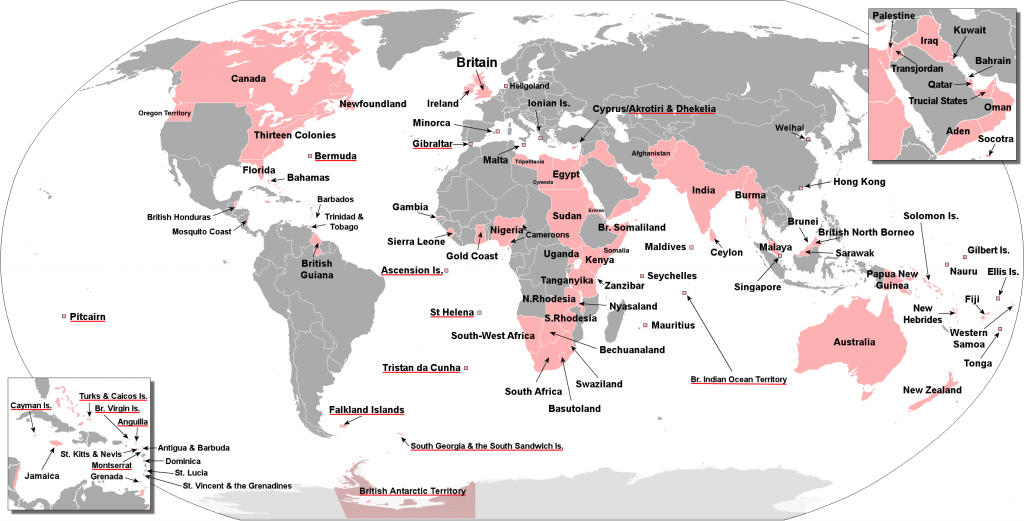
It is barely seventy-two years since a quarter of the human race lived, toiled, danced and finally died under the Union Jack. It is a very short time in terms of the history of the world, but in that time the British view of themselves, and their nation’s place in that world has altered, perhaps more radically than ever before. No other country has experienced a sudden and dramatic convulsion in its own outlook – no, not even terrible wars, occupation, subjection beneath the heel of an aggressive foreign invader, however awesome their effect, can produce a change in national philosophy as total as that undergone by the British since 1939. While Rome took centuries to crumble, the British Empire vanished almost overnight. (more…)

Reginald Pole (easy dates 1500 – 1558)

Reginald Pole / blogdelpadrefortea.blogspot.com

Reginald Pole / blogdelpadrefortea.blogspot.com

Please note that this important character from history had the plain surname of Pole. His name is not De la Pole – quite a different family*. Our subject became a Cardinal and later Archbishop of Canterbury, but through his mother (the Countess of Salisbury) he had a Yorkist claim to the throne of England. Being an intelligent man, he did not press this claim, or even mention it, though it must have passed through his mind on certain occasions. (more…)

By | 2012-12-07T11:11:32+00:00 December 7th, 2012|English History, World History|0 Comments

Frederick (the Great) of Prussia

He was born in 1740, the son of Frederick William I and his queen, Sophia Dorothea, a daughter of George I of Great Britain. As a boy he was bullied by his father, who thought nothing of whipping the child in front of shocked servants. His father was known is royal circles as ‘the royal drill-sergeant’, and with reason. Frederick William was a strict religionist, violent-tempered, notorious for his malreatment not only of his son but for women and servants too. It is not surprising that that the boy grew up to be peculiar. (more…)

By | 2012-12-05T11:18:18+00:00 December 5th, 2012|Austrian history, German History, World History|0 Comments

Two Dukes of Burgundy: Philip the Bold & Philip the Good

Our first Duke of Burgundy was born in 1342, a son of John ‘the Good’. There were so many dukes of this region of France that the theory that each earned a nickname because it was thus easier to identify each one is probably right. As a youth he fought at Poictiers against the English, was captured along with his father, and ransomed. (more…)

By | 2012-12-03T10:05:59+00:00 December 3rd, 2012|English History, French History, World History|0 Comments
Load More Posts