Dean Swift – Page 39 – General History

admin

Home/Dean Swift

About Dean Swift

‘Dean Swift’ is a pen name: the author has been a soldier; he has worked in sales, TV, the making of films, as a teacher of English and history and a journalist. He is married with three grown-up children. They live in Spain.

The Middle Ages

Historians disagree about exact dates, but I believe it is generally accepted that the phrase ‘Middle Ages’ denotes the period in Europe from around 700 A.D. to around 1500. Before 700 were ‘The Dark Ages’ – dark in many senses but mainly because professional historians did not exist after the decline of the civilised Roman Empire in the west, and countless barbarian invasions/occupations in the 5th and 6th centuries after Christ. (more…)

The first Hanoverian King of Great Britain


The British King who spoke no English / gameo.org

The British King who spoke no English / gameo.org

   The Hanoverian dynasty got its name from the city of Hanover, capital of Lower Saxony in Germany. In 1658 the grand-daughter of James I of England (and VI of Scotland), and daughter of Elizabeth of Bohemia, by name Sophia, married Ernst Augustus. He was the Duke of Brunswick-Luneburg, and became an Elector (Prince of the Holy Roman Empire with the right to elect the Emperor) of Germany in 1692. He took Hanover as his princely title and capital city.

It was Sophia and Ernst’s son (born 1660) who became George I, the first of the House of Hanover to be King of England (actually Great Britain and Ireland). Hanover as a territory contained important towns like Göttingen and Hildersheim. The defence of these places was to become a serious factor in British foreign policy during the eighteenth century.

So how was it that a full-blooded German ascended the throne of England?  The answer is because George’s mother Sophia and her issue were recognised as heirs to the throne by the Act of Settlement in 1701, which excluded the Roman Catholic Stuarts. George moved to England to become king in 1714 on the death of Queen Anne – herself a descendent of Catholic Mary Queen of Scots. (more…)

The German Democratic Republic (East Germany)

ulbricht_2In a recent post I put the word ‘democratic’ in this title between inverted commas, and a student has asked me why. Did I doubt, I was asked, that the GDR was democratic? Well yes I did. East Germany emerged in 1949 from the Soviet-occupied zone of recently defeated Germany. As an eastern European country it ceased to exist in October, 1990.

The Potsdam Conference had, among countless other disgraces, invented a country divided into four zones, each occupied by one of the victorious Allies. They were American, British, French and Russian, though why the French should have got a zone to themselves when they had hardly fired a shot in anger at the commencement of the Second World War is questionable. Three-fifths of France fell to the Nazis in 1940 but the French were permitted to govern the rest of the country as a ‘neutral’ state with its own government at Vichy. As Vichy collaborated with the Germans from day one the term ‘neutral’ is dubious. The Third Reich had by that time invaded the Polish Corridor, Czechoslovakia, Denmark, parts of Norway, Belgium and the Netherlands. (more…)

Berlin: City, Congress, Airlift & Wall

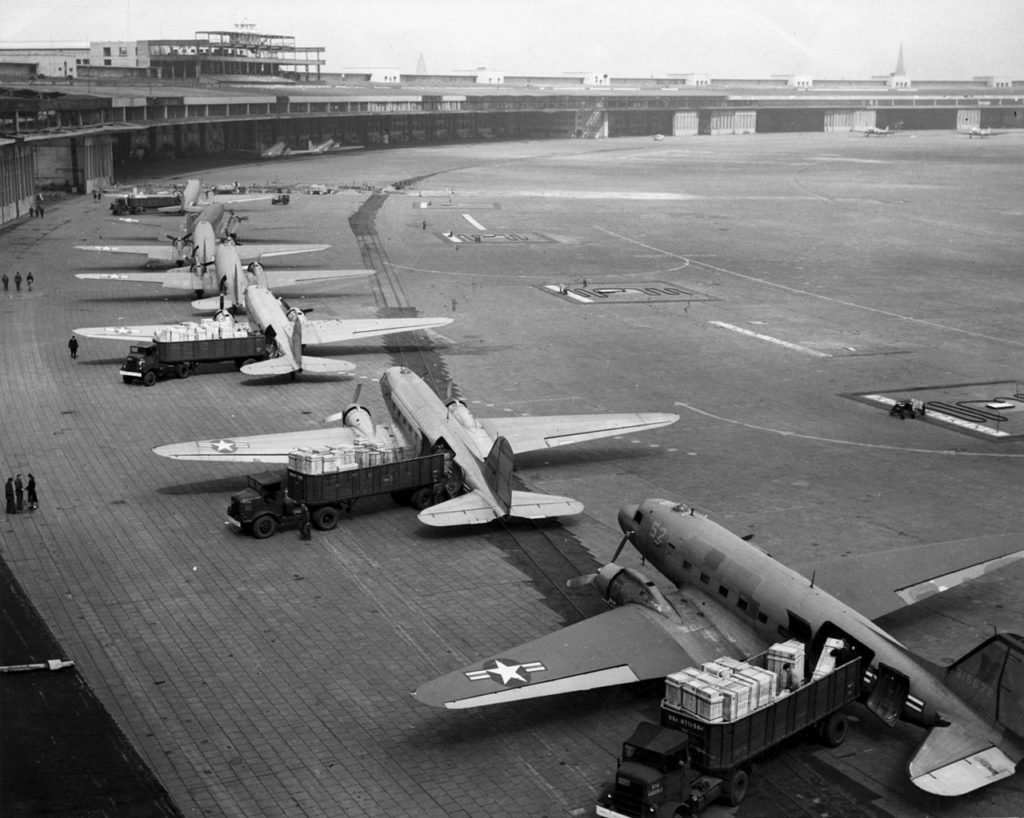
Berlin was the capital of Germany from 1871, though it was also the capital of Prussia. When the capital moved from Bonn after the Second War, Berlin became again the capital and hub of Germany, but after the War the city found itself 110 kilometres inside the Russian Zone of a Germany divided (at various hideous conferences) into four: Russian, American, British and French sectors. The city itself was divided into West Berlin (480 sq.km.) and East Berlin (403 sq.km.). West Berlin was administered and governed by the United States, Great Britain and France, each having their Sector and military HQ. East Berlin was governed by the Communist GDR, under the military eye of around 200 divisions of Russian troops. West Berlin could probably muster a division and a half, and had its own (American) military commander. There was a complete military imbalance in all the post-war period. (more…)

A Seymour and a Dudley, not exactly saints

Edward VI, sickly son of Henry VIII / nndb.com

Edward VI, sickly son of Henry VIII / nndb.com

Seymour (pronounced ‘Seemer’) is a name that rings bells throughout British history. There is still a Seymour Marquess of Hertford living at Ragley Hall in Warwickshire. One of the best-known from that brood of planners and plotters was Edward, Ist Earl of Hertford (pronounced ‘Harfod’) and Duke of Somerset. He was born around 1500 and managed to survive to fifty-two, something of a miracle in the sixteenth century, for reasons of health or politics. (more…)

The Battle of ‘the Bulge’

American infantry moving in the Battle of the Bulge / wikipedia.org

American infantry moving in the Battle of the Bulge / wikipedia.org

I happened to see a new DVD of an old film with this title last night. It was a typical Hollywood presentation, cost a fortune, was directed oddly enough by an Englishman, Ken Annakin (but not Skywalker). The script was quite literate, the acting good as always. The customary Hollywood absence of anyone British or Canadian in scenes supposedly from the Second World War was adhered to. I remember a Spielberg epic called Saving Private Ryan in which the director even managed to make it appear that the Normandy Invasion of 1944 was entirely American. The GIs had two beaches in Normandy, and the British/Canadians etc. had three, but no hint of this appeared in the movie. It was a bit like this in The Battle of the Bulge (1965). Henry Fonda and Robert Ryan played the military heroes, backed up by James Macarthur and of course Charles Bronson and Telly Savalas and there went your first ten million dollars off the budget before the camera was turned. (more…)

The ‘good’ old days

The first half of the 19th century saw the population of Britain expand more rapidly than was healthy. Thanks to huge medical advances, more hygiene and better food, and because more children survived (out of the broods of a dozen or more), early Victorian families (1841 – 61) in the population of England, Scotland and Wales grew from 17 to 23 millions. Large families were the rule in upper, middle and lower classes. Queen Victoria herself was to have nine children. In the mining districts seventeen was considered normal.

'Play up and play the game!' / bbc.co.uk

‘Play up and play the game!’ / bbc.co.uk


Guests admitted to the sacred circle of the family home would find their hostess pregnant, attended by a flock of little boys and little girls coming for a peep. The father or paterfamilias was the absolute centre of regularity and order; whether or not he adored his children he was an awe-inspiring figure, whiskery, his judgements infallible, supposedly irreproachable in his moral conduct (though many contemporary writers thought not); his wife, who had probably been a mere wisp of a girl when he married her at seventeen or eighteen, had become (and had to become) a ‘housekeeper, nurse, governess, and sitting hen’. She would be broad, stiff in her corsets, and lacking in ideas (though contemporary writers would seem to give this last conceit the lie!). (more…)

By | 2013-06-11T07:21:10+00:00 June 11th, 2013|English History, Philosophy, World History|0 Comments

A Hohenzollern for Spain?

Queen Isabel II of Spain, unhappy daughter of Fernando VII

Queen Isabel II of Spain, unhappy daughter of Fernando VII

Isabel II was the daughter of Fernando VII, possibly the worst monarch Spain ever had; her reign contained two unpopular regencies and the Carlist Wars (q.v.). There were personal scandals, changes of government and a state of almost permanent conflict between factions. The crown was offered to no less than five possible candidates, among them Leopold of Hohenzollern-Sigmaringen, a member of the Catholic ruling Prussian dynasty.

So far so indifferent, but William I, King of Prussia, was not keen on the idea. He knew well that France would dislike the idea intensely, as a Prussian on the throne of Spain would frighten them. Von Bismarck (q.v.) however approved, and persuaded Leopold to accept the proposition; he did so in June, 1870. Few statesmen and diplomats have enjoyed so much power as the ‘Iron Chancellor’.

Some historians believe that Bismarck persuaded Leopold precisely because he wanted war with France, while others deny this. It seems only too possible that the first group were right, and that Bismarck’s risky project would have led to war.

French foreign minister Gramont made it clear that the move would not be tolerated. At this point William of Prussia confirmed his dislike of the move to Leopold, and the family renounced the candidacy.

France enjoyed her brief diplomatic triumph, but both Bismarck and von Moltke, chief of staff of the Prussian army were utterly depressed, not a mental condition that could guarantee anyone’s peace of mind in Europe. Then Gramont made things much worse by asking William in a written message if he would please ensure that Leopold would not even think of renewing the candidacy! This was the perfect opportunity for Bismarck to make one of his lightning moves – he published the famous EMS telegram in which William had explained what was happening to Bismarck. The latter published a specially shortened version of the telegram,  which made it seem as if the French demands were peremptory. William rather crudely rebuffed the French Ambassador and ended diplomatic relations with France. The stage was thus set for the Franco-Prussian War (1870/71) which could very easily have been avoided.

The Spanish throne was finally accepted by the Duke of Aosta, second son of Victor Emanuel of Italy. His name was Amadeus I but he might well have been Amadeus the Brief, for he reigned from 1871 – 1873, when he abdicated. Then the First Spanish Republic was declared.

Looking on with a certain detachment, and a good deal of philosophy, it might have been better all round if the Hohenzollern candidate had become the King of Spain. I join a few others who wonder if a mutually friendly Spain and Prussia might possibly have influenced William II enough around 1910 -1914 to have avoided the First World War. But who knows?

Missing or misdirected: $13,000 million for Haiti


Only two years after the catastrophic earthquake that almost destroyed the island of Haiti, killing many (200,000 is one estimate) and leaving more homeless, it would not be incorrect to ask what has happened to the huge sums of money raised by international organisations and private donors to finance the recovery of the island. (more…)

What was ‘Apartheid’?


Nelson Mandela / theclinic.cl

Nelson Mandela / theclinic.cl

  The word itself is Afrikaans or South African Dutch and means ‘separateness’. In the 50s of the last century a morbid joking pun was made in the music halls, calling it ‘apart-hate’, and one can understand why. It was the purely racial policy of a government, stemming from the Population Registration Act of 1950 in South Africa. The Act divided the population into three: Bantu if you were black, White, and Coloured if you were of mixed race. A little later a fourth section was added – Asian. (more…)

Load More Posts