Dean Swift – Page 40 – General History

admin

Home/Dean Swift

About Dean Swift

‘Dean Swift’ is a pen name: the author has been a soldier; he has worked in sales, TV, the making of films, as a teacher of English and history and a journalist. He is married with three grown-up children. They live in Spain.

Monarchist Republics (or Republican Monarchies)


French Marshal Macmahon / wikipedia.org

French Marshal Macmahon / wikipedia.org

 At first sight our title might seem a misnomer, rather like ‘Benevolent Dictator’ or ‘Historical Novel’. But one was set up and lasted for eight years in France (1871 – 9). Following the capture of Napoleon III at Sedan, a republican government of National Defence was organised, one assumes to carry on with the not yet decisive Franco-Prussian War. (more…)

By | 2013-06-04T09:57:41+00:00 June 4th, 2013|French History, German History, World History|0 Comments

Heydrich and the massacre at Lidice

Heydrich /wikipedia.org

Heydrich /wikipedia.org

My new wife and I settled into our new home in a country lane at Santa Úrsula on the island of Tenerife in 1980. In a small cottage on the other side of the narrow road there lived a little old woman who kept her garden well and herself to herself. Still, I managed to make friends with her through my wife’s shared interest in flowers. (more…)

Who was Florence Nightingale?


Wounded soldiers called her 'The Lady of the Lamp' / telegraph.co.uk

Wounded soldiers called her ‘The Lady of the Lamp’ / telegraph.co.uk

  Sufficiently immortal in England’s history to appear in 1066 And All That under the comic names of ‘Florence MacNightingown’ and even ‘Florence MacNightshade’, she was the founder of nursing as a profession for women. Though as a member of a prosperous family she had no need to work, it was her own money and her religion mixed with an innate toughness that gave her the vocation to tend the sick. She was also a pioneer, if you like, of the feminist idea of breaking away from the constraints of Victorian family existence and carving out her own career. (more…)

By | 2013-05-30T10:08:52+00:00 May 30th, 2013|British History, Russian history, Today, World History|0 Comments

America’s Supreme Court

The Supreme Court building / becketfund.org

The Supreme Court building / becketfund.org

Most developed countries have a Supreme Court, which means what it says.* It is the maximum legal authority a third branch of the government, independent however of the legislative (Congress or Parliament) and the Executive (The President or Head of State); yet it is only a small body of highly qualified judges, appointed in the case of the United States by the President, with the agreement of the Senate or Upper House. There were only nine members when the Court was established in 1869, and they held and hold their place in the Supreme Court for life. (more…)

The Terror in France (1792 – 4)

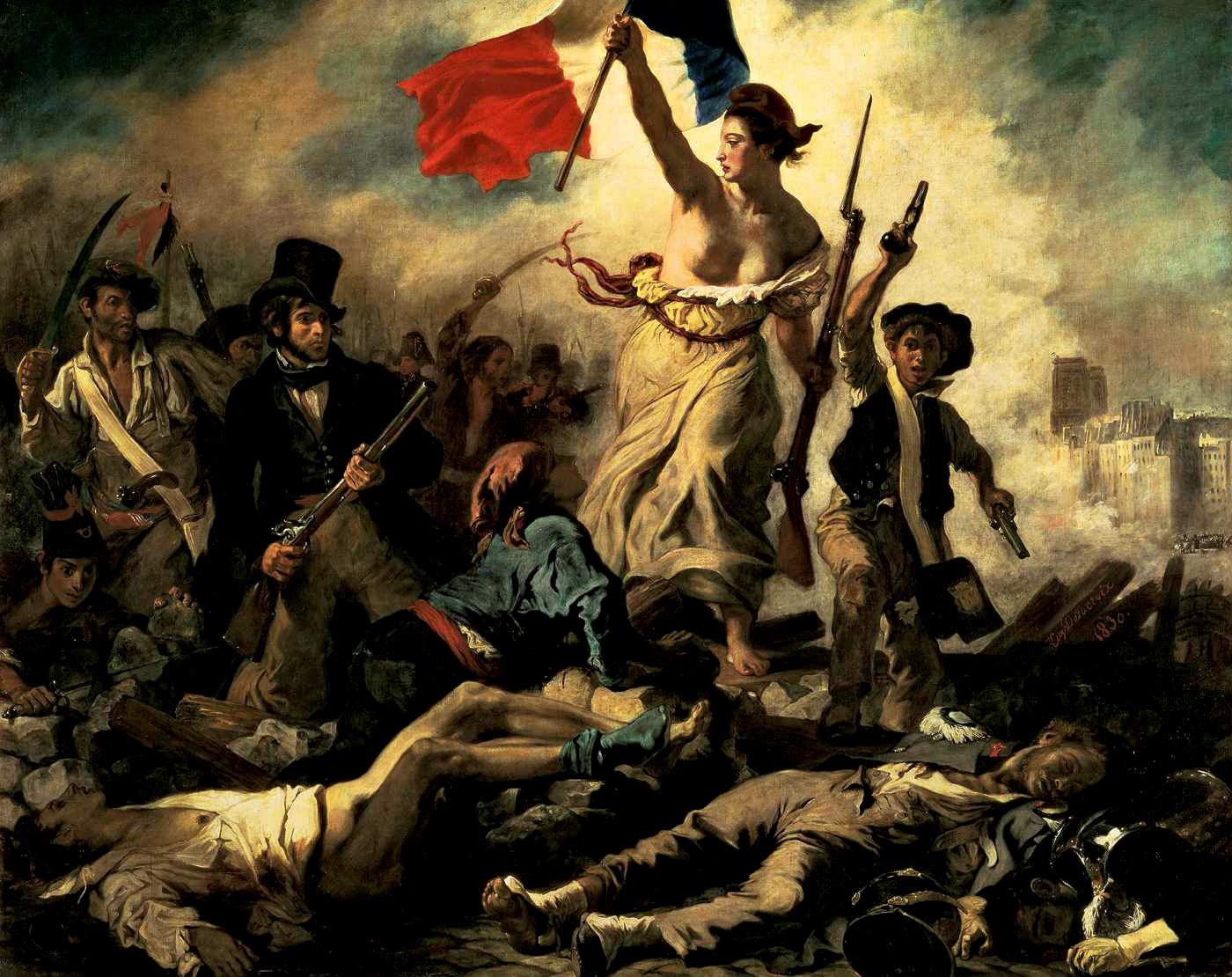
    Liberty Leading the People by Eugene Delacroix  A crucial moment arrived in France when the much-sought revolution seemed to be petering out. Those who had staked everything on it, their fortune, their families, properties and reputations, stood in danger of failure through inanition. Foreign armies threatened the borders, there was civil war in the Vendée which looked unpromising, as the royalists could win it. Prices were high even for France and there was an economic crisis. Something radical (and nothing could be more radical than the club of the Jacobins) had to be done. It was. (more…)

By | 2013-05-28T11:50:37+00:00 May 28th, 2013|French History, World History|0 Comments

Charles M. Talleyrand-Périgord (‘Since the masses are always eager to believe something, for their benefit nothing is so easy as to arrange the facts.’

Talleyrand / wikipedia.com

Talleyrand / wikipedia.com

The French statesman was born in 1754 with a club-foot, a piece of bad luck he shared with Kaiser Wilhelm II and Lord Byron. None of the three allowed their pronounced limp to impede an upwardly mobile career. Byron, a poet who loved boxing, swam the Hellespont, an act of physical courage most athletes with both feet intact would shy away from. The Kaiser thought his kingly first cousins found his limp funny and mimicked it. He was thus only too anxious to have a world war, and achieved that ambition. Charles Talleyrand found the French army closed to him, so he became a priest instead. (more…)

Caustic Congresses III: the Peace of Utrecht (1713)


Great men conferring / dailykos.com

Great men conferring / dailykos.com

Of all the peace conferences that turned caustic almost at the moment of signing, the Peace of Utrecht which ‘ended’ the War of the Spanish Succession (q.v.) wins a prize. The year was 1713; the comparatively peaceful eighteenth century was just beginning. The seventeenth had been full of blood and thunder.

The Congress met at Utrecht in the Low Countries without the presence of Austria. Philip V (Felipe Quinto) stayed as King of Spain but had to renounce his claim to the French throne, and to accept the loss of Spain’s European empire. Later, Austrian emperor Charles VI found he could not carry out his plans for expansion without allies, and accepted the terms of Utrecht at Rastadt and Baden in 1714, one year later. (more…)

Caustic Congresses II: the Treaty of Versailles

The Treaty of Versailles / AKJ Images/Imperial War Museum

The Treaty of Versailles / AKJ Images/Imperial War Museum

This treaty has been blamed by many historians as a more than indirect cause of the Second World War. It was supposed to be a treaty made between the Allies and Germany to be signed on 28 June, 1919, but negotiations continued until 1923. Germany however did not take part in the debates aired before the actual signing. Most intelligent Germans therefore thought it was a dictated agreement for peace, which could not be morally binding. (more…)

Caustic Conferences

 Wars are expensive, brutal and finally useless, as long as human beings will kill others in an argument over territory or sovereignty. The longer they last the worse, it seems, the agreements invented in the ‘peace treaties’ are. This is the first of a series of analyses of famous Congresses or Peace Treaties which left a decidedly nasty taste in the mouth on both sides. (more…)

Load More Posts