Dean Swift – Page 87 – General History

admin

Home/Dean Swift

About Dean Swift

‘Dean Swift’ is a pen name: the author has been a soldier; he has worked in sales, TV, the making of films, as a teacher of English and history and a journalist. He is married with three grown-up children. They live in Spain.

Holocaust: Facts and figures

Facts and Figures holocaustThe word itself comes from the Hebrew word Shoah. This was the affliction suffered by Jews in Nazi-dominated Europe from 1933 to 1945. It is usual to divide the ordeal into two periods, before and after 1941.

During the first period various anti-semitic measures were taken in Germany; later in Austria. The Nuremberg Laws were passed in Germany in 1935, by which Jews lost rights to citizenship, any right to hold public office, practise professions (including medicine), get married to Germans, or use public education. Jews’ property and businesses were first registered, later expropriated. There was a general encitement to use violence in the street or in the home against anyone Jewish, of whatever age or sex. Dr. Goebbels’ publicity offices encouraged hatred. ‘True’, that is ‘ethically pure’ Germans were expected to hate the Jews.
(more…)

By | 2014-04-01T14:38:34+00:00 October 31st, 2010|Jewish History|47 Comments

The American Civil War

The American Civil War

By Dean Swift

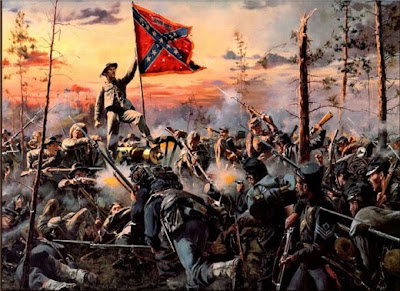
Like all civil wars, none of which are the least civil, the American Civil War was a murderous and bloody conflict between brothers, fathers and sons, uncles and nephews and cousins. In other words, it was fratricidal. It lasted four years, and had to take place basically because eleven Southern states wished to leave the Union. The war was fought between the United States’ federal government and the Confederate States of America.

The conflict started on April 12th, 1861. After a bombardment mostly without casualties, Federal leader Robert Anderson surrended Fort Sumter in the harbour mouth of Charleston, South Carolina. His garrison consisted of around 85 soldiers. He had been besieged by around 5,500 Confederate troops under Beauregard.

(more…)

By | 2025-05-20T21:04:06+00:00 October 31st, 2010|English History, US History, World History|6 Comments

The American Revolution

1776 – 1783:  American colonists revolt and declare independence

One of the more obvious oddities about the American War of Independence is that it need not have happened. By no means all citizens established in the thirteen Colonies desired or craved for independence from Britain. If the eventual leaders of the War had listened to some of their colleagues instead of beating the drum, things might have been quite different.

(more…)

By | 2025-05-20T21:04:47+00:00 October 31st, 2010|US History|1 Comment

Jack The Ripper and the British Royal Family

The name describes the pseudonymous murderer of at least seven women, all of them prostitutes, in or near the poor district of Whitechapel in London from August 7 to November 10, 1888. The identity of Jack the Ripper has never been truly established, though many candidates have been put forward by eminent writers, criminologists and cranks. Many novelised versions have been written and published. Many film stories have been made and distributed – some with notable success.

All but one of the Ripper’s victims were killed while ‘on business’ in the streets. The police and the judicial authorities call this ‘soliciting’, or ‘soliciting for immoral purposes’. In each instance, the victim’s throat was cut, and the body mutilated in such a way that officials recognised that the murderer had a good knowledge of human anatomy.

(more…)

By | 2010-10-31T10:12:58+00:00 October 31st, 2010|English History, World History|3 Comments

Alexander the Great

All records of Alexander by his own contemporaries have disappeared. We have to depend, all of us, including historians, historical novelists, and teachers, on histories compiled three or four centuries later from the material that was not then lost. In them references appear, sometimes not. Arrian’s chief source was King Ptolemy, who, though a little older, was a companion of Alexander’s, and was there, close to him, from boyhood. Arrian’s work only begins at Alexander’s accession after the semi-mysterious death of his father King Phillip. Historian Curtius’ early chapters have all vanished. Diodorus, who covers the correct time and tells us a lot about Phillip as well, says little of Alexander. For these first two decades (nearly two thirds of Alexander’s life) we have to depend on Plutarch. But Plutarch does not cite Ptolemy during most of his History of Alexander. He was also a bit of a novelist and sensationalist.
(more…)

By | 2025-05-20T21:03:33+00:00 October 31st, 2010|African History, Asian History, Greek History, World History|0 Comments

The Charge of the Light Brigade

Though the actual battle was inconclusive (18 October, 1854), a part of it has entered the lexicon of war myths as strongly as Hastings (1066) or Trafalgar (1805) because of the added refinement of ‘human interest’.

The Battle of Hastings saw the end of Saxon hegemony in Britain, and the beginning of Norman rule under William the Conquerer. But the battle is chiefly remembered because the Saxon leader, Harold, died with an eye pierced and his skull crushed by a war arrow. Trafalgar was an effective and crushing defeat for Napoleon Bonaparte, but it was a sea battle (romantic) fought between three great seafaring nations (England, France and Spain), and during the conflict Horatio Nelson was shot down on his own deck by a French sniper balanced (God knows how) in the high shrouds of an enemy warship (pure Hollywood, except that it happened).

(more…)

By | 2025-05-20T21:03:22+00:00 October 31st, 2010|World History|0 Comments

Josef Stalin

Iósif Stalin

Iósif Stalin

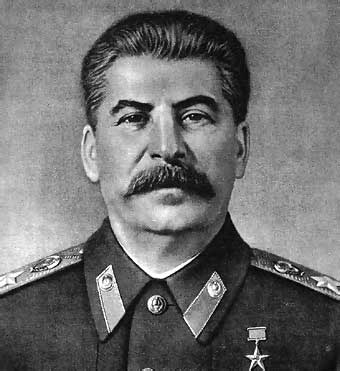
Born in Georgia, his family name was actually Djugashvili, and his adopted middle name was Visarionovitch. This hero of the Soviet Union was a living reminder of the ancient truth that holds that most great ideologies are in themselves worth study, or even practical use; the problem is that, accepting the human race as it is, the ideology must be adapted and executed as reality by a member of that race, and as the race is flawed, the original ideology which might have been excellent if properly observed, changes and is ultimately corrupted by its association with human beings.

(more…)

By | 2017-07-21T14:19:43+00:00 October 31st, 2010|Asian History, Russian history, World History|1 Comment

The British Empire

What we mean by this expression was (formerly) an apparently haphazard collection of lands throughout the world linked by common allegiance to the British throne. In 1800, though Britain had lost her Thirteen Colonies in North America, she still retained Newfoundland, scarcely populated parts of Canada and many West Indian islands, plus other islands useful for trading purposes. Britain held Gibraltar from Spain following the Treaty of Utrecht which ended the War of the Spanish Succession. In 1788 she had created convict settlements in New South Wales, Australia, which greatly helped the condition of overcrowding in prisons at home.

(more…)

The orchestrated Suez Canal Affair (1956)

Suez is a ship canal joining the Mediterranean Sea (at Port Said) with the Red Sea (at the Gulf of Suez). It was built to provide a sea route from Europe to Asia that did not involve having to sail all the way round Africa. It was built by French engineer Ferdinand de Lesseps between 1859 and 1869. It is unusual for a canal in that it has no locks, as the two sea levels are almost the same.

The British bought holding shares in the canal in 1875, and the entire Canal Zone was held as a British base from 1882 to 1955. Egypt nationalized the canal company in 1956, which started the Suez War and briefly closed the canal. It was closed again from 1967 to 1975 after the Six-Day and Yom Kippur Wars.

(more…)

By | 2025-05-20T21:02:33+00:00 October 31st, 2010|African History, Asian History, English History, World History|0 Comments

The Great Cabinet Re-shuffle: the significance

On a recent Sunday the President of the Government was asked at a meeting if he intended to remodel his government, by making changes among the ministers. Rodríguez Zapatero replied briefly to the effect that the only change considered at the time was a new post for the retiring Minister of Labour, Celestino Corbacho. Sr. Corbacho had announced his intention of returning to the normal (?) everyday debate in Catalan politics.

As writers in all the Spanish newspapers correctly predicted, this meant that on the day after, a Monday, the El Pais website duly ‘leaked’ the news that there was about to be a positively volcanic re-shuffle of responsibilities in the Cabinet, in which only Mr Zapatero himself would be untouched, one way or the other.

First, Zapatero has removed three of his most stalwart fans and supporters. María Teresa Fernández de la Vega, senior vice-president and ZP’s staunchest admirer; Miguel Angel Moratinos, Foreign Minister, and Elena Espinosa, Minister for the Environment are all out. They will be given sinecures for their pains. Moratinos learnt about his abrupt dismissal while occupying his seat in Congress, and was seen to weep.

(more…)

By | 2010-10-26T09:43:54+00:00 October 26th, 2010|Spanish History, World History|0 Comments
Load More Posts