Dean Swift – Page 85 – General History

admin

Home/Dean Swift

About Dean Swift

‘Dean Swift’ is a pen name: the author has been a soldier; he has worked in sales, TV, the making of films, as a teacher of English and history and a journalist. He is married with three grown-up children. They live in Spain.

Spanish Airports: Castles in the Air?

When we were very young, we occasionally heard adults sigh and say, “Of course it would be very nice to have a cottage in the country, but I fear it’s just a castle in the air.” We then knew that what our older and betters were dreaming of would never happen. In Spain, however, those dreamy castles in the air have become airports. And they have ‘happened’; forty-six of them. You name the city or large town, and you can be sure it either has a super-modern airport, or is in the process of building one.

In the Community of the Canary Islands there are eight airports, two of them on the island of Tenerife, north and south. La Gomera has a quite beautiful example of this monstrous public spending. In December, 2010, the Gomera airport processed 1,891 passengers, or an average of 67 passengers per day. In that month there were 121 ‘operations’ (landing or takeoffs). In terms of the whole year, there were 1,776. Freight to a total weight of 621 kilos was handled at La Gomera in December. During the year – 9,199 k. One airline uses Gomera Airport: Binter Canarias. The seagoing ferries, nationally-owned or private, whose executives may have been bothered by the building of an airport in La Gomera, need not have been. The sea ferries are just as packed with passengers, but go much faster, as they were and did before the airport was opened.

(more…)

By | 2019-03-29T20:06:01+00:00 January 22nd, 2011|Spanish History|0 Comments

Sir Francis Drake: Pirate or Patriot?

The 'pirate' Drake knighted by the Queen after circumnavigating the world / elpaid.com.uy

The ‘pirate’ Drake knighted by the Queen after circumnavigating the world / elpaid.com.uy

Drake (1540 – 1596) was an English admiral and explorer, the first Englishman to circumnavigate the world. He was unpopular, to say the least, in Spain, where he was known as a corsair, an adventurer or simply a pirate. The Spanish called him El Draco and hated him.

When he was twenty-seven he sailed with his cousin, John Hawkins on a slave-trading voyage to Africa, and spent the following years engaged in privateering raids on what was called then, The Spanish Main, meaning whatever parts of the Spanish Empire he could successfully assault. England was at war with Spain at the time.

In 1577 he formed a syndicate headed by Queen Elizabeth I (the idea was principally hers) to undertake a voyage of circumnavigation of the world. At least that was the official view. The hidden agenda was the launching of a series of punitive attacks on Spanish-owned ports, where rich plunder awaited the brave or foolhardy.

(more…)

By | 2014-04-01T14:26:04+00:00 January 12th, 2011|English History, Spanish History|3 Comments

Winter of discontent followed by glorious summer?

We are now well launched into the year two thousand and eleven – eleven years after a change of century. As the infamous 20th gradually diminishes in our memory, with its two World Wars, the tentacles of Socialism and the mostly blind grasp of Capitalism dulling our minds, it is satisfying to know that according to U.N. statistics, 200,000 persons will be lifted out of extreme poverty during each day of 2011. What is classified as extreme poverty? Living on $1.25 or equivalent per day. Which is all very well for the rest of Europe and the world, but what about a country where more than a million and half people have no income whatsoever?

(more…)

The Battle of Arnhem 1944

General Browning, husband of novelist Daphne de Maurier / homeusers.brutele.b

Arnhem is the sixth largest city in the Netherlands. It was the scene of fierce and remorseless fighting between 17 and 26 September, 1944, following the successful invasion of Normandy in June, by allied troops, ships and airforces.

The idea for a parachute/glider-mounted attack in the Dutch Netherlands is said to have been General Montgomery’s, though it was backed by General Eisenhower, supreme commander of the allied forces, and Winston Churchill, Britain’s prime minister. The idea was a very good one, strategically speaking, but it failed to take heed of local advice about cleverly hidden German tank regiments between Nijmegen and Arnhem. In fact the allies decided to take no notice whatever of clear and accurate intelligence. Clearly, in the minds of the planners lay the idea that if Arnhem should prove successful, it would raise the morale of the inading allies tremendously – as indeed it would have – had the Arnhem plan worked.

(more…)

Anticlericalism

Anti-clericalism is not the same as anti-Christian movements. Most Roman emperors tried to stamp out Christianity from the death of Christ under Tiberius until Constantine the Great decided to adopt Christianity as an official religion within the Empire, thus ceasing the practice of pitting Christians against lions and other wild animals, such as hyenas, in the ring.

The name anti-clericalism applies in modern times to any policy bent on destroying the moral and political power of the Christian Church, and subordinating its non-spiritual functions within the State. Though there have been many instances of anti-clericalism at the expense of the Orthodox Church (Russia and Turkey), and even now in Moslem countries (see recent massacres of Christians in Iraq and Afghanistan), the term is usually restricted to aggressive hostility towards the Roman Catholic Church, its Pope, bishops, priests, monks and nuns. (more…)

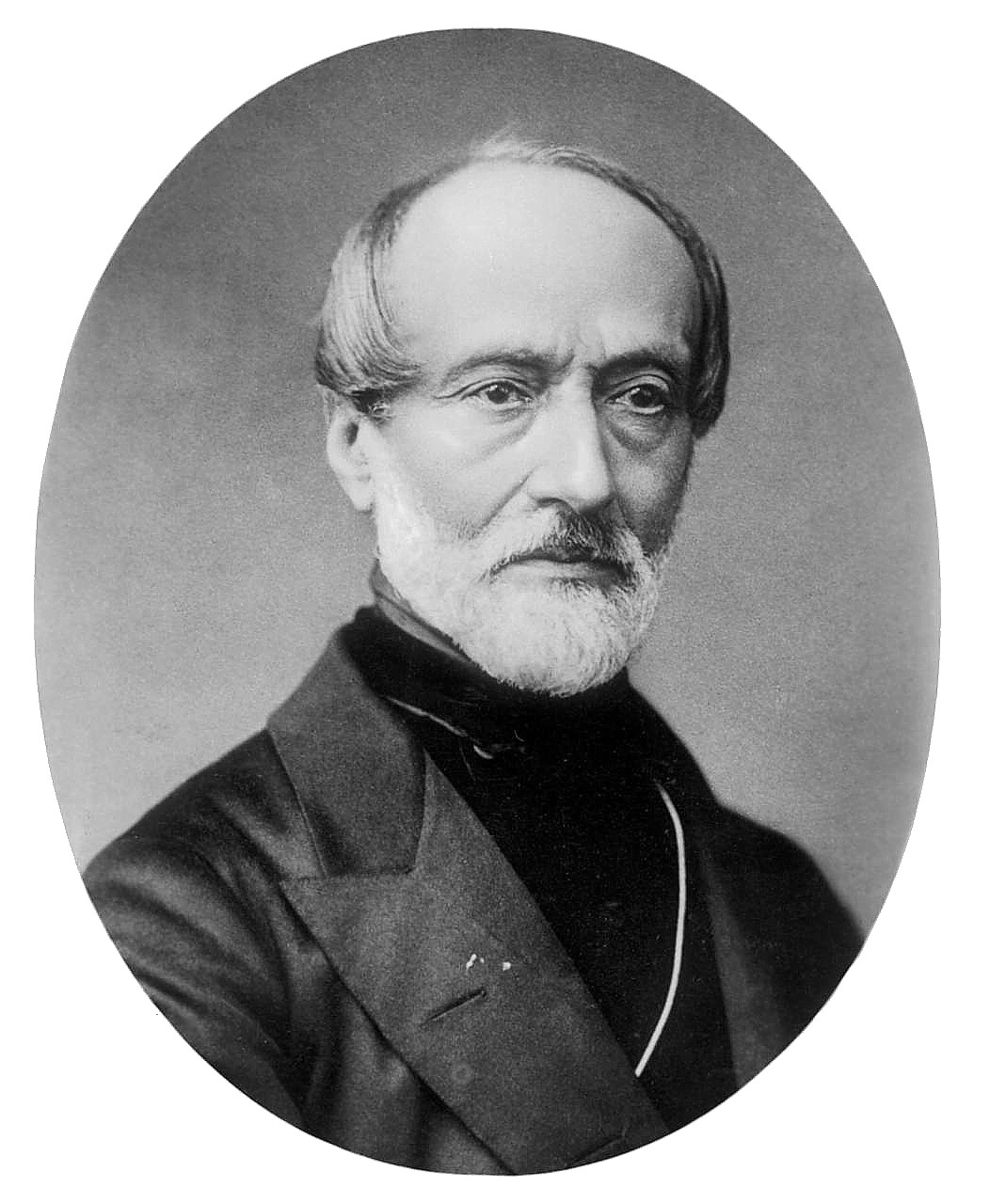
Mazzini and Garibaldi

Giuseppe MazziniGiuseppe Mazzini (1805 – 72) has been called ‘the apostle of Italian republicanism’. He was a doctor’s son, born in Genoa, and was politically minded enough to enlist in the Carbonari (a violent Italian secret society) in the early 1820s, barely eighteen years old. He soon became bored with the group’s sporadic, occasionally revolutionary conspiracies, and decided to found his own revolutionary movement in March, 1831.

With ‘Young Italy’ he attempted not only to unite Italy through a national uprising, but to encourage and elevate Italian patriotism by heated moral fervour. His detailed plans for a national insurrection in June 1832 failed when the Piedmontese authorities arrested most of his collaborators.

‘Young Italy’ resorted to the occasional, sporadic and ill-organised uprisings which had so frustrated Mazzini in the first place. From his HQ in Marseilles, and later in London, Mazzini developed the concept of a republican brotherhood of nations. He now established ‘Young Europe’ – a movement based upon non-sectarian principles – oddly enough.

(more…)

By | 2014-04-01T13:40:22+00:00 December 30th, 2010|Italian History|0 Comments

Admiral Fisher (1841 – 1920)

John Fisher photographed around the time of his cooperation with the White Rajah of Sarawak / en.wikipedia.org

John Fisher photographed around the time of his cooperation with the White Rajah of Sarawak / en.wikipedia.org

John Arbuthnot Fisher was one of the last great fighting sailors, in the tradition of Nelson, Frobisher and Drake. He first went to sea as a midshipman with the British Royal Navy at the age of thirteen.He survived this often cruel and demoralising apprenticeship, and went on to fight as an eighteen year old third lieutenant with the White Rajah of Sarawak, Brooke, who was engaged in the business of sweeping the multitudinous pirates of Sumatra from the South China Sea. Fisher survived that too.

(more…)

By | 2010-12-28T13:09:14+00:00 December 28th, 2010|English History, World History|0 Comments

The Ancien Régime: what was it and did it work?

Countless times as you read books and learned pamphlets on history, you will meet the French words Ancien Régime. It is an easy bet that many of us only half know what these two simple words signify. The translation is easy: in English – traditional method of government by royalty; in Spanish – el antiguo regimen.

(more…)

Spain: This peculiar strike

I have not mentioned the air traffic controllers ‘strike’ because the media has talked of nothing else since the dreadful weekend at the beginning of December, when all air traffic over Spanish territory was cancelled at the orders, apparently, of AENA, the government-controlled body that manages Spain’s far too numerous airports (47 at the last count, many virtually unused, but the Ministry of Development is building more at towns you may never have heard of, like Teruel).

(more…)

Load More Posts