English History – Page 18 – General History

English History

Home/English History

The ‘Indignants’ and Anarchy: what it is all about

We see on the daily news programmes that ‘Los Indignados’ have returned to the Puerta del Sol and the Plaza de Cataluña in Spain, and various other municipal hot points in Europe, to celebrate an anniversary. It was in May last year that European city-dwellers learned to put up with their plazas and places filled to saturation with the young and the old, of every sex, of every class, of every profession, setting up camp, breaking out the same tired old political cant on badly spelled, cheaply printed placards. These are the ‘Indignants’. (more…)

Ian Fleming & the Count’s Chitty-Chitty-Bang-Bang

The good Count Z. in the original Chitty / commons.wikimedia.org

The good Count Z. in the original Chitty / commons.wikimedia.org

The suave inventor of James Bond had already suffered a heart attack at the age of 52 when he began writing about a magic motor car with rather a long name. His son Caspar was 8, and dearly loved tales about myth, pretence and mechanical objects. Fleming went to a seaside hotel to recover and write for his son. He remembered a certain Count Sborowski who used to race an auto with an impossibly long bonnet called ‘Chitty’ at Brooklands. (more…)

The Cabinet System

Many students are accustomed to using the terms Prime Minister and The Cabinet and even The Cabinet Rooms in their studies and essays, but do not know much more about what these words represent. The term prime minister was first used when it was invented for the first of them, Sir Robert Walpole. He became PM in 1762.

The phrase did not start as much more than a term of abuse. Cartoonists in the eighteenth century loved it, and got a lot of cynical humour out of it. The position was officially called First Lord of the Treasury, and the British had to wait until 1905 for the term ‘prime minister’ to be used on a Royal Warrant. Funnily enough, it was first employed in the Chequers Estate Act, by which a rich man donated his mansion and its park to the nation, with the nice idea that prime ministers could relax in the country during weekends, not at all a bad idea when you realise that Number 10, Downing Street is little more than a small town house with just enough room to swing a cat. It is quite likely that Chequers has seen more important politicking than Downing Street, as many PMs have preferred to do their world-shaking manoevering in the comfortable and more private atmosphere of an English country house. (more…)

Canada

This is the second largest country in the world, and yet there is little mention of her in the media. Unless one of Canada’s great cities holds an Olympic Games, as did Montreal, you never hear about Canada. The same situation abounds with the two great islands of New Zealand. The reason for this lack of newsworthyness is probably that Canada (and New Zealand) are very well governed, exceedingly rich, and both are willing members of the Commonwealth of Nations. (more…)

British politics; Grenville & three Greys

William Wyndham Grenville, son of Prime Minister George Grenville, and a first cousin of the Younger Pitt was born in 1759. He went to Eton and Oxford (as do and did so many PMs), and was sitting in the House of Commons as a Member for a Buckinghamshire constituency for only eight years before being raised to the peerage as a Baron in 1790 when he was 31.

One year before becoming a Baron he was Home Secretary, and became Foreign Secretary during crucial years for the British Empire – 1791 to 1801.

During cousin Pitt’s second administration Grenville chided him not very gently for his policies at home, which kept him out of the Cabinet, but Young Mr Pitt could not ignore Grenville’s immense popularity both inside the House and out of it.It was just as well that after Pitt’s premature death, Grenville was personally invited by George III to form a coalition government. For those students who are not quite certain what a ‘coalition government’ is, Britain has one now. Mr Cameron (Conservatives) and Mr Clegg (Liberal Democrats) are joint prime ministers, and the Cabinet contains officials from both parties. Another famous coalition was in action throughout the Second World War, with Clement Atlee as Deputy Prime Minister to Winston Churchill. (more…)

Sad, sick, bloody Mary Tudor

Mary I (Tudor); awful father, awful headaches,propensity to burn heretics / simple.wikipedia.org

Mary I (Tudor); awful father, awful headaches, propensity to burn heretics / simple.wikipedia.org

Biographers have already used hundreds of pages to describe the life of this daughter of Henry VIII. In a super-brief page on a website the writer must keep things down to a bare minimum. Mary I was the first ruling queen in England since the Empress Matilda (1102 – 67). She was born into the terrible but brilliant sixteenth century in 1553, the only surviving child of Henry VIII and the Infanta Catherine of Aragón.

Sick and subject to migraine from birth, she had to suffer the indignities of her dreadful father’s attempts at divorce from her mother in order to marry another woman (Anne Boleyn). During these goings on Mary was separated from her mother and never saw her again. She was a teenager of fifteen. (more…)

By | 2012-05-01T11:21:51+00:00 May 1st, 2012|English History, Spanish History, World History|0 Comments

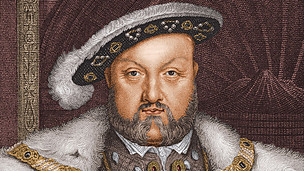
Henry VIII of England – The Tyrant King

Henry VIII England

Henry VIII England

Taken from the point of view of their victims, Henry VIII of England was (almost) the equal of Ivan the Terrible of Russia (1530 – 84). Both had a merciless way with opponents. Both had their closest confidants and advisors killed. Both are considered by many of their countrymen as great and powerful monarchs of whom one should be proud.

Henry was born in Greenwich, London in June 1491. As a young man he excelled in sports and music, spoke and wrote in French, Latin and English. He and friends invented the game of royal tennis which evolved into Lawn Tennis within four hundred years. He succeeded to the English throne at eighteen, after the death of his father, first of the Tudor dynasty, who had won it in battle against the crowned and annointed Plantagenet king Richard III. (more…)

By | 2017-07-21T14:48:52+00:00 April 27th, 2012|English History, Russian history, World History|0 Comments

Fabled motorcars: a personal reminiscence

 Now in 2012, they would be called ‘jalopies’, or ‘old crocks’, but in their epoch, some of the motorcars I have met driven were notoriously expensive, fast and comfortable. Some of the companies that made these treasures have gone bankrupt; two were swallowed by German groups which have maintained name and quality and even added some. BMW and Mercedes-Benz have full order books. Jaguar went through a shaky period owned by the Ford Motor Company, but has recovered its Englishness. The order book is full there too.

My first fabulous car was a Rolls-Royce Silver Dawn (1952) owned by Kenneth Horne, a member of the governing board at my school. (more…)

Peterloo Massacre

/ litencyc.com

/ litencyc.com

In August, 1819, a loud discussion which rapidly turned to unrestrained violence happened in Manchester, centre of the Industrial Revolution in England. As usual on these occasions, the row erupted between civilians and government forces in the form of local yeomanry.

A vociferous crowd, much larger than expected, had gathered in St. Peter’s Fields to hear  celebrated orator Henry Hunt address them on what are these days called ‘liberal’ and ‘progressive’ issues. There were around 80,000 people at the rally, peaceful at first, but local magistrates, whose representatives were among the crowd, heard otherwise, and sent the constables to arrest Hunt. (more…)

By | 2012-04-26T08:41:56+00:00 April 26th, 2012|English History, World History|0 Comments

Analysis of the families of York and Lancaster (1312 – 1543)

Edward III of England / londononline.coukSome detailed knowledge of both dynastic families is essential to students of English and European history. The ‘Wars of the Roses’ was not a civil war (q.v.); nor was it just a war between a red and a white rose; it was a series of conflicts paid for and manned by nobled families, leading (they hoped) to the Crown, and with it – absolute power. Wih the Wars of the Roses bloodily accomplished, an usurper who had usurped the crown of an usurper, who had taken it from a properly annointed King who was the son of a properly annointed King (who was himself an usurper) finally achieved peace. This achiever was Henry VII, first of the terrible and terrifying Tudor Dynasty.

This is roughly how it goes: (more…)

By | 2012-04-22T18:41:50+00:00 April 22nd, 2012|English History|0 Comments
Load More Posts