World History – Page 56 – General History

World History

Home/World History

British Intelligence Services

In a recent edition I talked about MI6, which was once called SIS, and which, oddly enough, is mostly referred to these days using that original acronym (the Secret Intelligence Service). In many ways the service is similar to the United States’ CIA. Just as in that vast country the FBI (founded by Edgar Hoover) has some similarities with Britain’s MI5, in re the CIA and the SIS are supposed to deal with overt and covert overseas surveillance (and actions). The FBI and MI5 are supposed to deal with national or interior security and/ or surveillance.

Whatever you call them, between the two, no citizen can keep any secrets hidden from the all-seeing eye. George Orwell was right, as usual. The ordinary citizen may not know this, but governmental organisations know ALL (from your CV to your favourite toothpaste) – about YOU.

(more…)

By | 2010-11-22T13:22:14+00:00 November 22nd, 2010|English History, Jewish History, World History|3 Comments

David Cameron: How is he doing?

Not very long ago the British people decided they had had enough of Blairism, not enhanced much by Brownism when Tony Blair stood down as prime minister. Typically, they just managed to elect a Tory premier – without a majority. It never matters to the British people (or the Spanish for that matter) what an elected government actually achieves during its mandate, only that it should be of the right colour, usually red. The British had the chance to elect a new type of government which, had it obtained an absolute majority, could have had at least the opportunity to pull poor old Britain up by the bootstraps. Instead, the voters forever besotted with the idea that Socialism is the ninth wonder of the world, landed the Brits with a coalition.

(more…)

By | 2025-05-20T21:05:44+00:00 November 10th, 2010|World History|2 Comments

Happy birthday MI6

I am reminded by the publication of an enormous new book (810 pages) written by Keith Jeffery that Great Britain’s first official secret service agency has just passed its hundredth anniversary. The book is called MI6: the history of the Secret Intelligence Service, 1909 – 1949.

It was late in 1949 that a retired naval officer, Mansfield Cumming was prompted to organise what became known by its initials – SIS – the Secret Intelligence Service. Cumming was only 50.

In 1910 it was unthinkable that a whole book might eventually be dedicated to an analysis of a secret service, which, by the nature of its name, should be secret. This heavy tome is probably the first part of a two-volume history, since it deals with the period ending in 1949. Mansfield Cumming himself once said that if he had been asked to write an autobiography he would agree and produce a 400 page book, vellum-covered, with every page blank.

(more…)

By | 2010-11-09T11:05:23+00:00 November 9th, 2010|English History, World History|3 Comments

The Schlieffen Plan

The 'Schlieffen Plan' / schoolhistory.co.uk

The ‘Schlieffen Plan’ / schoolhistory.co.uk

General Count von Schlieffen (1833 – 1913) was Chief of the German General Staff from 1891 until he retired in 1905. As a testament to his work for Germany, he finished an operational plan with which Germany could successfully attack France.

With certain modifications, the ‘Schlieffen Plan’ as it became known, was used as the basis for the massive German attack in 1914. Schlieffen believed a number of things, based on his military knowledge, and general awareness of exactly what was what and what could be done, or not done:

(more…)

By | 2010-10-31T11:03:34+00:00 October 31st, 2010|German History, World History|0 Comments

The American Civil War

The American Civil War

By Dean Swift

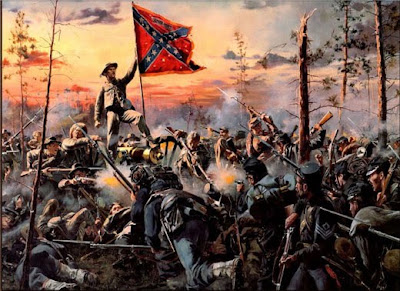
Like all civil wars, none of which are the least civil, the American Civil War was a murderous and bloody conflict between brothers, fathers and sons, uncles and nephews and cousins. In other words, it was fratricidal. It lasted four years, and had to take place basically because eleven Southern states wished to leave the Union. The war was fought between the United States’ federal government and the Confederate States of America.

The conflict started on April 12th, 1861. After a bombardment mostly without casualties, Federal leader Robert Anderson surrended Fort Sumter in the harbour mouth of Charleston, South Carolina. His garrison consisted of around 85 soldiers. He had been besieged by around 5,500 Confederate troops under Beauregard.

(more…)

By | 2025-05-20T21:04:06+00:00 October 31st, 2010|English History, US History, World History|6 Comments

Jack The Ripper and the British Royal Family

The name describes the pseudonymous murderer of at least seven women, all of them prostitutes, in or near the poor district of Whitechapel in London from August 7 to November 10, 1888. The identity of Jack the Ripper has never been truly established, though many candidates have been put forward by eminent writers, criminologists and cranks. Many novelised versions have been written and published. Many film stories have been made and distributed – some with notable success.

All but one of the Ripper’s victims were killed while ‘on business’ in the streets. The police and the judicial authorities call this ‘soliciting’, or ‘soliciting for immoral purposes’. In each instance, the victim’s throat was cut, and the body mutilated in such a way that officials recognised that the murderer had a good knowledge of human anatomy.

(more…)

By | 2010-10-31T10:12:58+00:00 October 31st, 2010|English History, World History|3 Comments

Alexander the Great

All records of Alexander by his own contemporaries have disappeared. We have to depend, all of us, including historians, historical novelists, and teachers, on histories compiled three or four centuries later from the material that was not then lost. In them references appear, sometimes not. Arrian’s chief source was King Ptolemy, who, though a little older, was a companion of Alexander’s, and was there, close to him, from boyhood. Arrian’s work only begins at Alexander’s accession after the semi-mysterious death of his father King Phillip. Historian Curtius’ early chapters have all vanished. Diodorus, who covers the correct time and tells us a lot about Phillip as well, says little of Alexander. For these first two decades (nearly two thirds of Alexander’s life) we have to depend on Plutarch. But Plutarch does not cite Ptolemy during most of his History of Alexander. He was also a bit of a novelist and sensationalist.
(more…)

By | 2025-05-20T21:03:33+00:00 October 31st, 2010|African History, Asian History, Greek History, World History|0 Comments

The Charge of the Light Brigade

Though the actual battle was inconclusive (18 October, 1854), a part of it has entered the lexicon of war myths as strongly as Hastings (1066) or Trafalgar (1805) because of the added refinement of ‘human interest’.

The Battle of Hastings saw the end of Saxon hegemony in Britain, and the beginning of Norman rule under William the Conquerer. But the battle is chiefly remembered because the Saxon leader, Harold, died with an eye pierced and his skull crushed by a war arrow. Trafalgar was an effective and crushing defeat for Napoleon Bonaparte, but it was a sea battle (romantic) fought between three great seafaring nations (England, France and Spain), and during the conflict Horatio Nelson was shot down on his own deck by a French sniper balanced (God knows how) in the high shrouds of an enemy warship (pure Hollywood, except that it happened).

(more…)

By | 2025-05-20T21:03:22+00:00 October 31st, 2010|World History|0 Comments

Josef Stalin

Iósif Stalin

Iósif Stalin

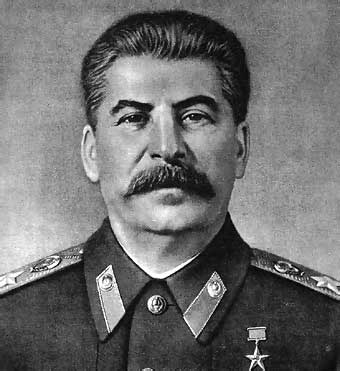
Born in Georgia, his family name was actually Djugashvili, and his adopted middle name was Visarionovitch. This hero of the Soviet Union was a living reminder of the ancient truth that holds that most great ideologies are in themselves worth study, or even practical use; the problem is that, accepting the human race as it is, the ideology must be adapted and executed as reality by a member of that race, and as the race is flawed, the original ideology which might have been excellent if properly observed, changes and is ultimately corrupted by its association with human beings.

(more…)

By | 2017-07-21T14:19:43+00:00 October 31st, 2010|Asian History, Russian history, World History|1 Comment

The British Empire

What we mean by this expression was (formerly) an apparently haphazard collection of lands throughout the world linked by common allegiance to the British throne. In 1800, though Britain had lost her Thirteen Colonies in North America, she still retained Newfoundland, scarcely populated parts of Canada and many West Indian islands, plus other islands useful for trading purposes. Britain held Gibraltar from Spain following the Treaty of Utrecht which ended the War of the Spanish Succession. In 1788 she had created convict settlements in New South Wales, Australia, which greatly helped the condition of overcrowding in prisons at home.

(more…)

Load More Posts