Dean Swift – Page 66 – General History

admin

Home/Dean Swift

About Dean Swift

‘Dean Swift’ is a pen name: the author has been a soldier; he has worked in sales, TV, the making of films, as a teacher of English and history and a journalist. He is married with three grown-up children. They live in Spain.

Sad, sick, bloody Mary Tudor

Mary I (Tudor); awful father, awful headaches,propensity to burn heretics / simple.wikipedia.org

Mary I (Tudor); awful father, awful headaches, propensity to burn heretics / simple.wikipedia.org

Biographers have already used hundreds of pages to describe the life of this daughter of Henry VIII. In a super-brief page on a website the writer must keep things down to a bare minimum. Mary I was the first ruling queen in England since the Empress Matilda (1102 – 67). She was born into the terrible but brilliant sixteenth century in 1553, the only surviving child of Henry VIII and the Infanta Catherine of Aragón.

Sick and subject to migraine from birth, she had to suffer the indignities of her dreadful father’s attempts at divorce from her mother in order to marry another woman (Anne Boleyn). During these goings on Mary was separated from her mother and never saw her again. She was a teenager of fifteen. (more…)
By | 2012-05-01T11:21:51+00:00 May 1st, 2012|English History, Spanish History, World History|0 Comments

Holocaust – the comments

Hundreds of comments have been posted on General-History following publication last year of the article on The Holocaust. Some comments are learnéd, some are not. Many are openly anti-Semitic. A few show sympathy with the victims. Some question the figures quoted. Anyone can find out the figures for themselves simply by making enquiries in any office of records in any of the countries I am about to list, or simply asking for statistics in Tel Aviv. For those commentarists who claim the Holocaust did not actually happen one feels sorry for those who must endure life near them. (more…)

General-History’s Sunday Humour

The bright young couple were proud of their beautiful Siamese cat, sitting observing the world at their feet one afternoon. The usual chorus of dogs in neighbours’ houses had just started, as it did twice or even three times a day, when sensible cats slithered or jumped into other people’s gardens, to kill a song bird here, lay a turd there, or moan in that particular way male cats have when another alpha draws near. Just then the Siamese said, rather surprisingly, “Miauw, miauw, wuff, wuff.” The couple looked at each other. “What did he say?” asked the wife. “Oh that,” replied the husband, “he’s practising; he’s going to be an instantaneous interpreter at peace conferences!” (more…)

By | 2012-04-29T08:06:19+00:00 April 29th, 2012|Humour|0 Comments

Six men shaken, but not stirred, nothing but a dream

The admiral standing erect near the double entrance doors of the Connaught Hotel in Carlos Place is dressed as a doorman. No-one dares think of him as a doorman, for his majestic presence. Even his unbeatable calm is disturbed when a taxi stops outside the old-fashioned hotel and out step two gentlemen in their eighties. The admiral stares. One old man has bushy beard, moustache and white whiskers. The other, paying the taxi, has no facial hair but a massive double chin. He makes an affable “Good morning!” to the admiral and passes into the hotel followed by the six-footer who says, “Fine day my dear mun,” to him. It is an Edinburgh accent. (more…)

By | 2012-04-28T15:20:24+00:00 April 28th, 2012|Humour, Today, World History|0 Comments

Henry VIII of England – The Tyrant King

Henry VIII England

Henry VIII England

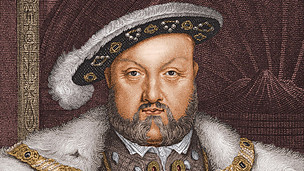
Taken from the point of view of their victims, Henry VIII of England was (almost) the equal of Ivan the Terrible of Russia (1530 – 84). Both had a merciless way with opponents. Both had their closest confidants and advisors killed. Both are considered by many of their countrymen as great and powerful monarchs of whom one should be proud.

Henry was born in Greenwich, London in June 1491. As a young man he excelled in sports and music, spoke and wrote in French, Latin and English. He and friends invented the game of royal tennis which evolved into Lawn Tennis within four hundred years. He succeeded to the English throne at eighteen, after the death of his father, first of the Tudor dynasty, who had won it in battle against the crowned and annointed Plantagenet king Richard III. (more…)

By | 2017-07-21T14:48:52+00:00 April 27th, 2012|English History, Russian history, World History|0 Comments

Fabled motorcars: a personal reminiscence

 Now in 2012, they would be called ‘jalopies’, or ‘old crocks’, but in their epoch, some of the motorcars I have met driven were notoriously expensive, fast and comfortable. Some of the companies that made these treasures have gone bankrupt; two were swallowed by German groups which have maintained name and quality and even added some. BMW and Mercedes-Benz have full order books. Jaguar went through a shaky period owned by the Ford Motor Company, but has recovered its Englishness. The order book is full there too.

My first fabulous car was a Rolls-Royce Silver Dawn (1952) owned by Kenneth Horne, a member of the governing board at my school. (more…)

Peterloo Massacre

/ litencyc.com

/ litencyc.com

In August, 1819, a loud discussion which rapidly turned to unrestrained violence happened in Manchester, centre of the Industrial Revolution in England. As usual on these occasions, the row erupted between civilians and government forces in the form of local yeomanry.

A vociferous crowd, much larger than expected, had gathered in St. Peter’s Fields to hear  celebrated orator Henry Hunt address them on what are these days called ‘liberal’ and ‘progressive’ issues. There were around 80,000 people at the rally, peaceful at first, but local magistrates, whose representatives were among the crowd, heard otherwise, and sent the constables to arrest Hunt. (more…)

By | 2012-04-26T08:41:56+00:00 April 26th, 2012|English History, World History|0 Comments

Plain English

What is plain English? What it is not is only too obvious, and can be read in all British bureaucratic communication, business letters, government departments, and sadly, much of modern English journalism – anywhere where there is linguistic contact with the public. Applications, safety instructions, official letters, licences, applications for licences or passports, insurance policies, hire-purchase documents, guarantees, instruction booklets for use of electric or other machinery etc. should be presented clearly, using language that people are certain to understand. With few exceptions, they are not:

Take, for instance, this real letter about house rents:- (more…)

By | 2012-04-24T09:47:08+00:00 April 24th, 2012|English Language, Humour, Today|0 Comments

General-History’s Comments Policy

This website is designed mainly for students of the subject of History. But it is followed enthusiastically by many thousands of people, especially young people, who are interested in general history, though not necessarily having to take examinations in it. From some of the recent Comments posted on the website, arises the feeling that we eliminate any criticism of the posts. This is untrue. We do have a policy over approval or disapproval of Comments, as follows: (more…)

By | 2012-04-24T08:02:25+00:00 April 24th, 2012|World History|0 Comments

Analysis of the families of York and Lancaster (1312 – 1543)

Edward III of England / londononline.coukSome detailed knowledge of both dynastic families is essential to students of English and European history. The ‘Wars of the Roses’ was not a civil war (q.v.); nor was it just a war between a red and a white rose; it was a series of conflicts paid for and manned by nobled families, leading (they hoped) to the Crown, and with it – absolute power. Wih the Wars of the Roses bloodily accomplished, an usurper who had usurped the crown of an usurper, who had taken it from a properly annointed King who was the son of a properly annointed King (who was himself an usurper) finally achieved peace. This achiever was Henry VII, first of the terrible and terrifying Tudor Dynasty.

This is roughly how it goes: (more…)

By | 2012-04-22T18:41:50+00:00 April 22nd, 2012|English History|0 Comments
Load More Posts