Dean Swift – Page 10 – General History

admin

Home/Dean Swift

About Dean Swift

‘Dean Swift’ is a pen name: the author has been a soldier; he has worked in sales, TV, the making of films, as a teacher of English and history and a journalist. He is married with three grown-up children. They live in Spain.

Errata in the printed version of General History

After the successful publication of three edited volumes of General History, we have discovered to our astonishment that errors abound! Prepositions and full stops have vanished. There are unwanted spaces between words. In Volume Three the German word Ruhr has become a much-repeated Rhur. The editing and correcting was carried out with the utmost care, but errata occur and I must take the blame, for the printer can only print what he receives. Should a second edition be printed, it is to be hoped that these irritating mistakes will have been found and erradicated. We have also noted that both Volume II and Volume III carry the same article on Shakespearean vocabulary in the chapter on the English Language.

This is a message to faithful followers of www.general-history.com, from Jeremy Taylor, who writes the articles under the pen name of Dean Swift.

By | 2015-01-15T18:28:53+00:00 January 15th, 2015|Today|0 Comments

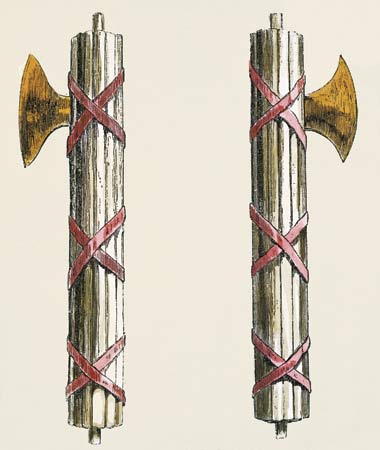
Fascism – a dreaded word

Fasci or Fasces / britannica.com

Fasci or Fasces / britannica.com

Fasci, literally meaning ‘bundles’, and perhaps descending from the fasci of thin staves of wood carried by Roman officials as symbol of authority, were established in Sicilian towns and villages in the late nineteenth century. They were mutually – supporting societies of peasants and workers; the basic trade union in fact. Their leaders varied in type and political opinion, but were usually anarchists, though many were teachers, local landowners and gentry, members of ancient and respected families. Not a few among them were local mafiosi. (more…)

By | 2015-01-10T19:01:21+00:00 January 10th, 2015|Italian History, Philosophy, Today, World History|1 Comment

William the ‘Sailor King’

/ paranormalx.yolasite.com

/ paranormalx.yolasite.com

William IV King of Great Britain and Ireland was born in the eighteenth century (1765) and died seventy-two years later. He was also King of Hanover from 1830 to 1837, because he was the third son of George III. He was called ‘the Sailor King’ because he joined the Navy at fourteen, serving around the coasts of the United States and in the West Indies. He was promoted admiral in 1811 at forty-six – not bad for the crusty British Navy – and then rose to be Lord High Admiral in 1827.

George IV (who had been the infamous Prince Regent) died in 1830, and William ascended the throne because his older brother had died. He was to be the penultimate British monarch of the House of Hanover. The country believed he had Whiggish (liberal) sentiments, and this might have beeen true, but he soon abandoned them, developing serious Conservative sympathies, obstructing the passing of the first Reform Bill in 1832.

William IV was the last British monarch to use prerogatory powers to dismiss a ministry which had won by a majority vote. He achieved this by firing Lord Melbourne in 1834 and inviting the Tories to form a government. He died in 1837 and was succeeded in that year by his niece Victoria at the age of eighteen. Queen Victoria did not fire Lord Melbourne; she learnt about politics and power from him. Ascending the throne as a Hanoverian, she changed the name to Saxe-Coburg-Gotha when she married a German prince.

Henry VI of England, sad man and king

/ en wikipedia.org

/ en wikipedia.org

Henry was born in 1421, and became King of England at the age of one. He had two reigns, due to the Wars of the Roses. The first lasted from 1411 to 1461; he was noted for his piety and general air of preferring to be left out of things. He was the only son and child of a very famous warrior, Henry V, who after the Battle of Agincourt married a daughter of the French King – Catherine of Valois. This sturdy couple managed to produce only our subject, a weakly child, disposed to illnesses and madness. During his infancy and adolescence his tutor the Duke of Bedford (a younger brother of Henry V) was regent, while another uncle, Humphrey of Gloucester was Lord Protector of England. Nothing of these three redoubtable men showed in the future Henry VI. The one useful thing he managed successfully was the founding of Eton and King’s College, Cambridge.
(more…)

Latest news on the books

/thehealthjunction.wordpress.com

/thehealthjunction.wordpress.com

Oyez! Oyez! Latest news on the books!

All three volumes of Jeremy Taylor’s brief chapters on world history, written under the name of Dean Swift for the website www.general-history.com and now in cheap paperback form, are available on Amazon.co.uk and also Amazon. com in America. The price plus p. & p. is extremely reasonable. The reading matter is colossal. The three volumes offer nearly one thousand pages of easily read history covering up to twenty-one different nations on this planet. Wars, treaties, personalities, politics, religions and philosophy plus many other categories abound. Order your copy/copies now, in this first month of the year 2015. Enjoy the wry humour and keen observation. Just go to Amazon and under books key in the words ‘General History Dean Swift’ and then choose – all three books, two or just one. ‘He (or she) who hesitates is lost!’

By | 2015-01-07T08:55:36+00:00 January 7th, 2015|English Language, Today, World History|0 Comments

Who said it?

An auctioneer / joystiq.com

An auctioneer / joystiq.com

Our first slightly intellectual quiz for the year 2015 presents the published words of an eccentric and wit, male, and the only clue to his identity is that he is not English. The sayings resemble a dictionary, which, I note, is another clue:

Acquaintance – A person whom we know well enough to borrow from, but not well enough to lend to. (It is) a degree of friendship called slight when its object is poor or obscure, and intimate when he is rich or famous.

Applause – The echo of a platitude.

Auctioneer – The man who proclaims with a hammer that he has pìcked a pocket with his tongue.

Battle – A method of untying with the teeth a political knot that would not yield to the tongue.

Conservative – A statesman who is enamoured of existing evils, as distinguished from the Liberal, who wishes to replace them with others.

Future – That period of time in which our affairs prosper, our friends are true, and our happiness is assured.

History – An account, mostly false, of events, mostly unimportant, brought about by rulers, mostly knaves, or soldiers, mostly fools.

Patience – A minor form of despair, disguised as a virtue.

Peace – In international affairs, a period of cheating between two periods of fighting.

Prejudice – A vagrant opinion without visible means of support.

Saint – A dead sinner revised and edited.

Please give your answer as to who write these lines in the form of a Comment sent to www.general-history.com.

By | 2015-01-02T09:48:38+00:00 January 2nd, 2015|Humour, Philosophy|0 Comments

The army of British India

/ masterdraper.blogspot.com

/ masterdraper.blogspot.com

Also known as the ‘Indian Army’, this was a British – officered military force in India; the other ranks, corporals, sergeants and warrant officers were recruited from the native population. Even so, some purely European regiments managed to stay put until the early 1860s.

The Indian Army served outside India as well, and had a deserved reputation for ferocity and good discipline; it remained (at least until the Sepoy Rebellion) a staunch and integral part of the Pax Britannica. It creators were locally found guards employed in the protection of the East India Company, known as sepoys. (more…)

Hohenstaufen & Hohenzollern Dynasties (further notes)

what remains of the castle at Staufen / flickrhivemind.net

What remains of the castle at Staufen / flickrhivemind.net

Brief details of these two important German dynasties have appeared before on in General-History.com. Here are some additional notes:

The Hohenstaufen royal dynasty got its name from the castle of Staufen, in north Swabia. From 1138 to 1254 members of the family wore the crown as Holy Roman Emperor (q.v.). The dynasty reached its most significant period with Frederick I Barbarossa and Frederick II; both were Kings of Germany and Sicily. The dynasty is best remembered for its support of culture and courtly behaviour, though their wars are by no means to be discounted.

As Holy Roman Emperor:

1138 – 1152 Conrad III

1152 – 1190 Frederick I Barbarossa

1190 – 1107 Henry VI

1198 – 1208 Philip of Swabia

1198 – 1214 Otto IV (both Otto and Philip maintained their claim)

1215 – 1250 Frederick II

1250 – 1254 Conrad IV

The German dynasty of Hohenzollern ruled Brandenburg/Prussia from 1415 to 1918, and Imperial Germany from 1871 to the end of the Great War. The family was first noted in the ninth century, in Swabia, and a branch became Burgraves of Nuremberg. Then a descendant, Frederick VIII was awarded the title of Elector of Brandenburg in the same year as the Battle of Agincourt (1415). The Thirty Years War over, the family continued its policy of expansion and consolidation of power, starting a lengthy rivalry with the House of Habsburg (1740 – 1871). Otto von Bismarck ensured that the Hohenzollerns obtained the imperial title in 1871, but the Great War destroyed Hohenzollern fortunes and forced abdication on the last emperor, Wilhelm II, a grandson of Queen Victoria of Britain.

As Electors of Brandenburg:

Frederick I (1417 – 1440), Frederick II, Albert, John, Joaquim I, Joaquim II, John George, Joaquim Frederick, John Sigismund, George, Frederick William (the Great Elector, 1640 – 1688).

As Kings of Prussia:

Frederick I (Frederick III as Elector Brandenburg 1688 – 1713), Frederick William I, Frederick II The Great, Frederick William II, Frederick William III, Frederick William IV (1840 – 1861).

As Emperors of Germany:

William I (also King of Prussia) 1861 – 1868, Frederick III (only 1888), Wilhelm (William) II 1888 – 1918

By | 2014-12-27T13:15:18+00:00 December 27th, 2014|History|0 Comments

Some Alexander Popes

Alexander VI / listverse.com

Alexander VI / listverse.com

These four Italians and one Spaniard made a contribution to the history of the Catholic Church, positive or negative according to your view and that of historians. Each chose the name, Alexander, by which they wished to be addressed, or remembered by. The original family name of one of them has stayed firmly etched in our mind, not necessarily for the best of reasons.

Alexander II (Anselm of Lucca) has an unknown birth date, but we do know he became pope in 1061 and died fourteen years later. He was Bishop of Lucca from 1057 and was a known reformer, campaigning strongly against corruption and immorality in the Church. He was one of the founders of the Paterine Party, whose principal aim was the stop priests marrying. One thousand years later they are still not marrying, though originally Protestant clergy who convert to Catholicism while married are permitted by the Vatican to keep their wives and children if they have any. This may seem unfair to priests baptised in the Catholic faith, but at least it provides employment for Anglican vicars unhappy within the Church of England and anxious to convert. (more…)

Some Clement Popes

Clement XIV suppressed the Jesuits / en.wikipedia.org

Clement XIV suppressed the Jesuits / en.wikipedia.org

Six Italian and one French, the following pontificates flourished (or not depending on their history) during the fourteenth, sixteenth, seventeenth and eighteenth centuries:

Clement V (Bertrand de Got) was a French pope born around 1260, who became Bishop of Bordeaux in 1299 before reaching forty. He is mainly remembered for suppressing the Knights Templar, after being elected pope in 1305. He was also responsible for moving the seat of the papacy to Avignon, a disastrous event for Italy, which he expedited in 1309. He remained pope for only nine years. (more…)

By | 2014-12-26T16:06:36+00:00 December 24th, 2014|Church history|0 Comments
Load More Posts